Retaining Wall Drainage Pipe: Types, Sizing, and Installation Cost
A retaining wall drainage pipe is the single most important component in a wall that actually survives. Most retaining wall failures are not caused by weak blocks or bad mortar — they are caused by water. When rainwater and groundwater collect behind a wall, they create hydrostatic pressure that pushes outward with far more force than the wall was built to resist. A drainage pipe, installed correctly at the base of the wall, gives that water a way out before it ever becomes a problem.
Skip the pipe and you are essentially betting tens of thousands of dollars that your soil will never get wet. It will. Here is what you need to know about the pipe itself, how to size it, and what it costs to put one in the right way.
Why Every Retaining Wall Needs a Drainage Pipe
Water is heavy. A single cubic foot of water weighs about 62.4 pounds, and a saturated soil mass can exert thousands of pounds of lateral pressure against a wall. That pressure — called hydrostatic pressure — is what slowly pushes walls out of plumb, cracks them, and eventually tips them over. Gravity and friction alone will not hold a wall back when the backfill behind it is waterlogged.
A drainage pipe addresses the root cause rather than the symptom. Instead of trying to build a wall strong enough to resist the water, you remove the water. Perforated pipe laid in a gravel bed behind and below the wall collects groundwater and routes it to a low exit point, usually daylighting at the end of the wall or into a storm drain. The wall stays dry, the backfill stays stable, and the structure does its job for decades.
For taller walls, the stakes are higher. Most local building codes require an engineered drainage system for any retaining wall over 3 to 4 feet, and many manufacturers will void a block warranty if the wall is built without one. If you are already paying for a wall — and retaining wall installation cost runs from roughly $25 to $75 per square foot — the pipe is a small fraction of the total and the cheapest insurance you can buy.
How a Retaining Wall Drainage Pipe Works
The concept is straightforward, but the details matter. A proper system is a sandwich of materials that work together:
- Perforated pipe carries water away once it reaches the base of the wall.
- Gravel or drainage aggregate surrounds the pipe and creates a free-draining zone.
- Filter fabric wraps the gravel to keep fine soil from clogging the system.
- A sloped base directs water toward the pipe instead of letting it pool.
- Weep holes or a daylighted outlet let collected water exit the wall face or the end of the wall.
The pipe is set slightly above the footing, sloped at a minimum of 1% (about 1/8 inch per foot) toward its outlet. Perforations face down so water rises up into the pipe while sediment settles below it. The gravel backfill — typically 3/4-inch clean crushed stone — extends from the base of the wall up through at least 12 inches of the backfill zone, giving water a fast path down to the pipe.
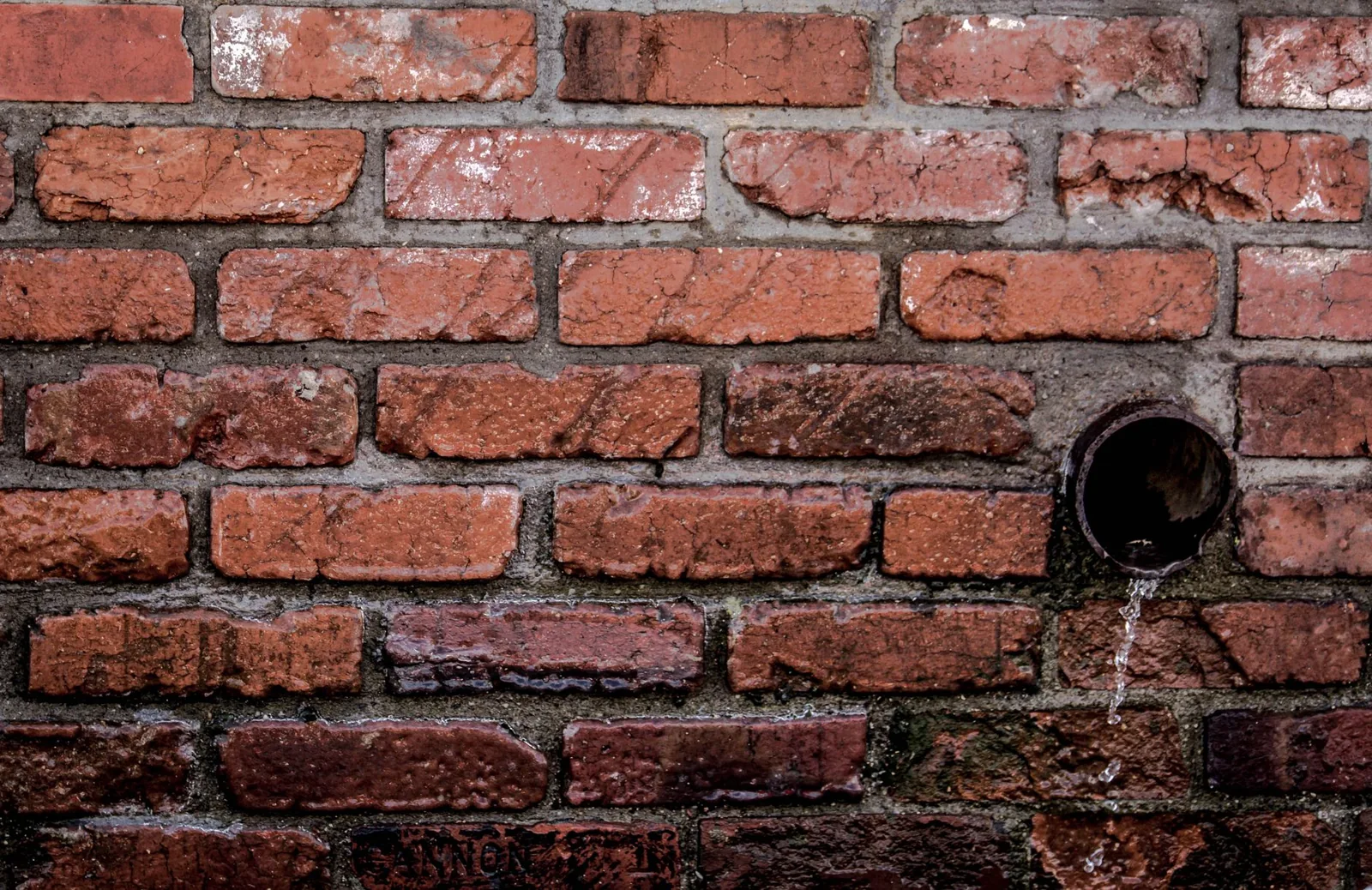
Photo by Jonathan Aman via Pexels
Types of Retaining Wall Drainage Pipes
You have a few realistic options, and the right one depends on budget, wall height, and how much water your site actually moves.
| Feature | Perforated PVC | Corrugated HDPE | Perforated Clay Tile |
|---|---|---|---|
| Cost per 10 ft | $8–$15 | $5–$10 | $12–$20 |
| Strength / crush resistance | High | Moderate to high | High |
| Ease of handling | Rigid, needs fittings | Flexible, coils | Rigid, heavy |
| Best for | Tall or structural walls | Most residential walls | Long-life / traditional builds |
Perforated PVC is the go-to for taller walls and commercial work because it is rigid and crush-resistant. Corrugated high-density polyethylene (HDPE) is lighter, cheaper, and flexible enough to snake around curves, which makes it the most common choice for residential walls in the 3-to-6-foot range. Clay tile is durable but heavy and labor-intensive, so it rarely makes sense unless you are matching a historic look.
Whatever you choose, look for the right perforation pattern. Pipe sold for downspouts or solid sewer line will not drain a wall — the perforations are what let groundwater in. For a retaining wall you want pipe rated for drainage, with either slotted or round perforations and a geotextile sock if your soil is sandy or silty.
What Size Retaining Wall Drainage Pipe to Use
The short answer for most residential walls: 4-inch diameter perforated pipe. It is the standard because it is cheap, widely available, and moves more water than a typical backyard wall will ever see.
Here is how sizing generally breaks down:
- Walls under 4 feet in well-drained soil: 4-inch perforated pipe is almost always adequate.
- Walls 4 to 8 feet: still 4-inch, but add a second pipe or a larger gravel zone if the wall is long or the soil is clay-heavy.
- Walls over 8 feet or retaining slopes: 6-inch pipe, and typically an engineered design with multiple outlets.
- High-groundwater or hillside sites: 6-inch pipe plus a separate French drain upslope to intercept water before it reaches the wall.
Do not oversize for the sake of it. A 6-inch pipe costs more, requires a deeper trench, and buys you nothing if the site drains fine with 4-inch. The failure mode on most walls is not an undersized pipe — it is a pipe that was never installed, installed flat instead of sloped, or buried without gravel and filter fabric.
How to Install a Retaining Wall Drainage Pipe
Installation happens during construction, not after. Retrofitting drainage behind an existing wall means excavating the entire backfill, which is why it is worth getting right the first time.
The process in order:
- Prepare the base. Compact the footing area and set the pipe on a level, compacted bed about 6 to 12 inches above the wall footing.
- Lay the pipe. Place perforations facing down, slope at least 1/8 inch per foot toward the outlet, and run it the full length of the wall.
- Wrap in filter fabric. Line the trench with non-woven geotextile fabric, leaving enough to fold over the top of the gravel later.
- Backfill with gravel. Surround the pipe with at least 6 inches of 3/4-inch clean gravel on all sides.
- Fold and cover. Fold the fabric over the gravel to keep soil out, then continue backfilling with soil.
- Daylight the outlet. Run the pipe out the end of the wall or through weep holes, ideally into a dry well, swale, or storm drain — never into the neighbor’s yard.
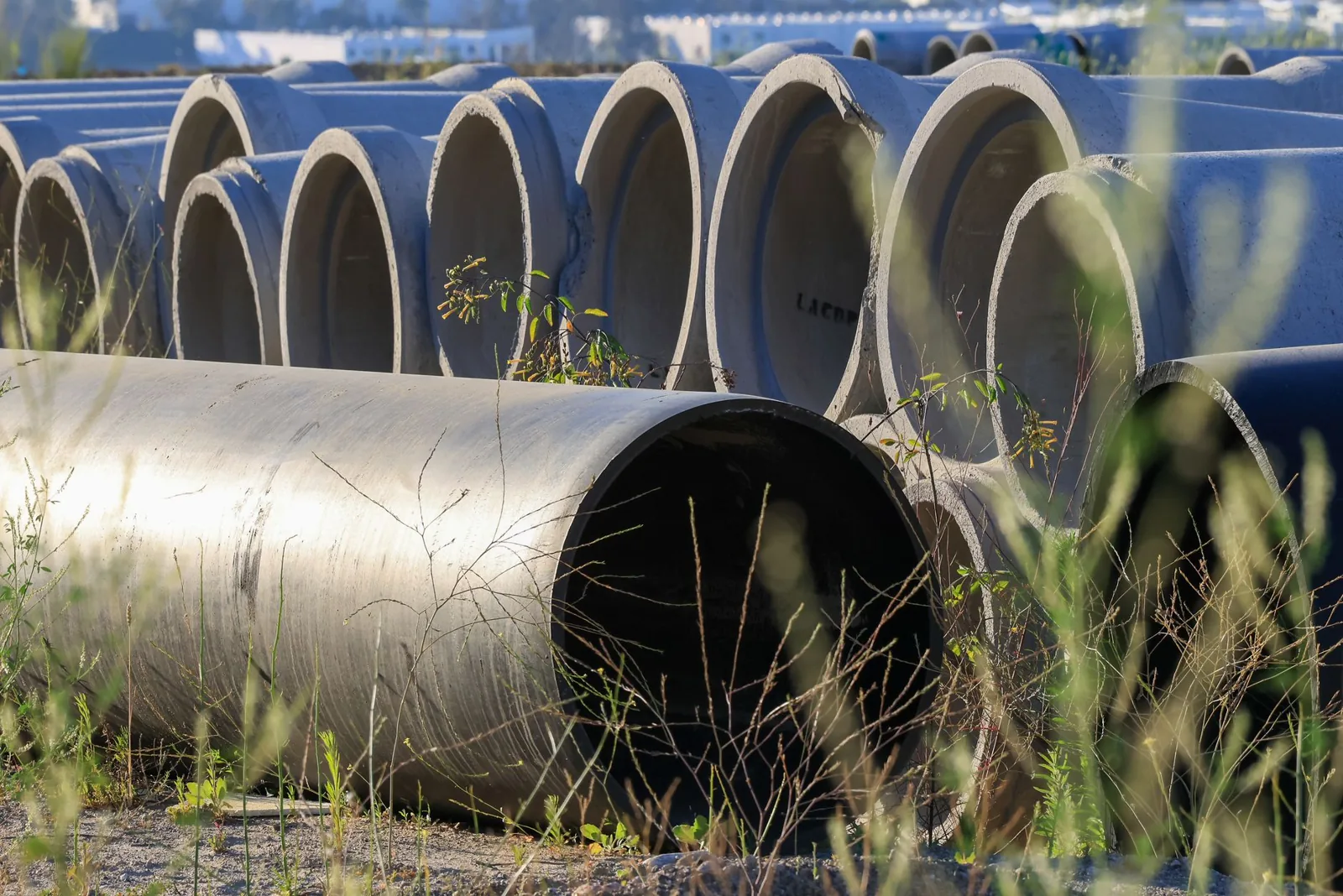
Photo by David Brown via Pexels
What a Retaining Wall Drainage Pipe Costs
The pipe itself is the cheap part. A 4-inch perforated HDPE pipe runs about $0.50 to $1.00 per linear foot, so a 40-foot wall needs roughly $20 to $40 of pipe. Perforated PVC runs closer to $0.80 to $1.50 per foot. Filter fabric adds another $0.30 to $0.60 per square foot, and 3/4-inch clean gravel costs about $30 to $60 per ton delivered.
What drives the price up is labor and excavation. If the drainage is installed as part of new construction, expect to add roughly $10 to $20 per linear foot over the base wall cost. If you are retrofitting drainage behind an existing wall, you are now paying for full excavation and disposal of the old backfill, and the job can run $30 to $50 per linear foot or more — sometimes close to the cost of rebuilding the wall outright.
As a point of reference, a new wall typically runs $25 to $75 per square foot installed, and you can estimate your project with our retaining wall cost per linear foot guide. The drainage system is usually 5% to 10% of the total wall budget. That is a small premium for the difference between a wall that lasts 5 years and one that lasts 50.
Common Drainage Mistakes and Warning Signs
Even with a pipe, installation mistakes are common. Watch for these:
- Pipe laid flat or back-pitched so water pools instead of draining.
- No filter fabric, letting silt clog the perforations within a few seasons.
- Perforations facing up, which lets sediment settle directly into the holes.
- Pipe daylighting into the neighbor’s property or dumping water against the house foundation.
- Weep holes blocked by mortar or soil, trapping water behind the wall.
If you already have a wall and suspect a problem, look for the telltale signs: bulging or leaning sections, horizontal cracks, efflorescence (white chalky mineral deposits), soil washing out from between blocks, or water seeping through the face after heavy rain. Any of these means the drainage is not doing its job, and the fix is almost never cosmetic. Budget for excavation — and read up on what retaining wall repair really costs before you call a contractor.
Frequently Asked Questions
Does every retaining wall need a drainage pipe?
Every wall over about 2 to 3 feet benefits from one, and most codes require drainage on walls over 4 feet. Short decorative walls in fast-draining sandy soil can sometimes get by with just gravel backfill and weep holes, but the pipe is cheap insurance on almost any wall.
Can I use a solid pipe instead of perforated?
No. Solid pipe carries surface water from a downspout or catch basin, but it cannot collect groundwater from behind a wall. A retaining wall drainage pipe must be perforated so water can enter along its length.
Which way should the perforations face?
Down. Facing the holes downward lets water rise into the pipe while sediment settles below it, which keeps the pipe from clogging.
How long does a retaining wall drainage pipe last?
Perforated PVC and corrugated HDPE both routinely last 30 to 50 years when wrapped in filter fabric and surrounded by clean gravel. The fabric and gravel do most of the longevity work by keeping fines out of the pipe.
Can I add drainage to an existing retaining wall?
Yes, but it is invasive. It means excavating the backfill, installing the pipe and gravel zone, and re-backfilling. That is why it costs more than building it right the first time.
For drainage design guidance, This Old House explains retaining wall drainage.
The Bottom Line
A retaining wall drainage pipe is not an optional upgrade — it is the difference between a wall that stands and a wall that fails. Water pressure is relentless, and it will find any wall without a path out. The pipe, gravel, and filter fabric together cost a small fraction of the wall and buy you decades of service.
If you are building a wall, spec a perforated pipe at the base, slope it correctly, wrap it, and daylight it somewhere safe. If you already have a wall showing cracks or a lean, deal with it now — the damage only accelerates once it starts. Whether you are planning a retaining wall or weighing it against a fence, make drainage part of the plan from day one.