Sump Pump Discharge Ideas: Where to Route Your Pump Water Safely
Where your sump pump sends its water matters just as much as the pump itself. A discharge line that dumps water three feet from the foundation can recycle that same water straight back into the basin, cycling the pump on and off for hours and burning through its motor years early. If you’re looking for sump pump discharge ideas that actually fix the problem instead of just relocating it, this guide covers the options that work, what they cost, and the mistakes that will cost you later.
The goal of any discharge setup is simple: move water far enough away, and in a direction, that it can’t come back. That usually means 10 to 20 feet from the house, downhill if your lot allows it, and into a spot where the water can soak in or drain away without pooling against the foundation. How you get there depends on your grade, your soil, and your climate.
Why Sump Pump Discharge Location Matters
A sump pump is only as good as its outlet. The basin under your floor collects groundwater before it can seep through cracks and into the basement, and the pump’s whole job is to eject that water outside. Dump it too close and you create a short circuit: the water soaks into the soil next to the wall, flows back into the drain tile or through the wall itself, and returns to the basin. The pump runs again, sometimes every few minutes during a storm, which shortens its life and spikes your electric bill.
Poor discharge also causes the exact problems homeowners are trying to avoid. Water pooling near the foundation saturates the soil, which expands and presses against the wall. Over time that hydrostatic pressure cracks poured concrete and pushes block walls inward. The same water pressure that cracks a foundation also works against garden walls and retaining walls, which is why a proper discharge line is the first piece of any yard-wide drainage plan. In freezing climates, water that collects and freezes around the outlet can ice up and block the line completely, so the next thaw sends water back through the floor instead of out the pipe.
Sump Pump Discharge Ideas for Every Yard
The right discharge idea depends on your lot, not just your pump. These are the setups that hold up across the most common yard types.
Discharge to daylight
If your lot slopes even slightly away from the house, gravity does most of the work for you. Run a buried or above-ground pipe from the pump outlet to a point 10 to 20 feet away, ending where the ground falls away. The pipe needs a continuous downhill pitch of at least 1/8 inch per foot so water never sits in the line. This is the cheapest, most reliable option whenever the grade allows it.
Pop-up emitter at the end of a buried line
For flat yards, the standard fix is a 4-inch PVC or corrugated line buried a few inches deep that ends in an NDS pop-up emitter. The emitter sits flush with the lawn and pops open when the pump runs, releasing water across the grass, then closes so dirt and grass clippings can’t clog it. Pair it with a freeze relief valve in cold climates so the buried portion can drain instead of freezing solid.
Dry well or gravel pit
Where there’s nowhere for water to daylight, dig a dry well — a hole filled with gravel or a preformed plastic chamber — well away from the foundation and route the discharge into it. Water collects in the void and percolates into the surrounding soil. This works only if your soil drains reasonably well; heavy clay will fill the well and back up the line.
Flexible extension hose
The quick-and-dirty option is a flexible discharge hose you can route to a safe spot. It’s the right call for a rental or a temporary fix while you plan something permanent, but it kinks, looks bad, and gets kicked out of place by mowers and kids. Treat it as a stopgap, never a permanent solution.
| Discharge Method | Best For | Typical Cost | Main Drawback |
|---|---|---|---|
| Discharge to daylight | Sloped lots | $2–$6 per foot of pipe | Needs grade away from the house |
| Pop-up emitter (buried) | Flat yards with lawn | $15–$40 for the emitter | Requires trenching |
| Dry well / gravel pit | No slope, draining soil | $100–$400 | Digging; fails in heavy clay |
| Flexible extension hose | Rentals, temporary fixes | $15–$50 | Kinks, eyesore, easy to block |
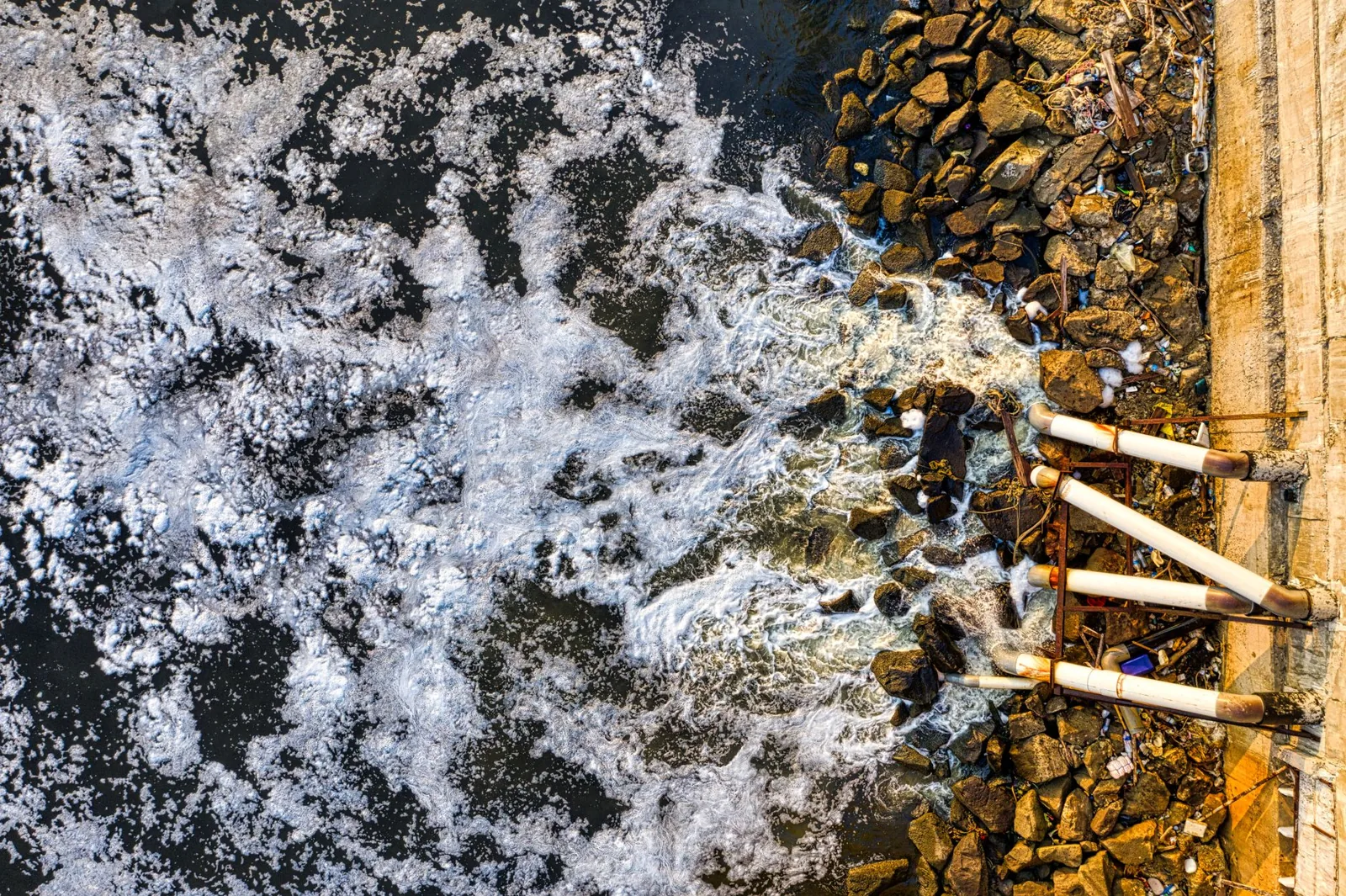
Photo by Tom Fisk via Pexels
How Far Should Sump Pump Water Be Discharged?
Most building codes and manufacturer guidance call for discharging at least 10 feet from the foundation, and 20 feet is the number most pros recommend when the lot allows it. Check your local code, because some municipalities write the distance into law. The outlet should also sit a few feet back from your property line so you aren’t pushing the problem onto a neighbor, and it should never discharge into a septic system, a sanitary sewer, or within a few feet of a window well or a basement walkout.
Slope matters as much as distance. A pipe that travels 20 feet but runs flat or slightly uphill will hold water, and standing water in a discharge line freezes in winter and breeds odor and algae in summer. Keep a continuous downhill pitch, and where the pipe crosses a sidewalk or a flower bed, bury it deep enough that a mower or foot traffic won’t crush it.
Sump Pump Discharge Mistakes That Cause Big Problems
The most expensive discharge mistakes are also the most common. Discharging next to the wall is the big one, but a short list of others catches homeowners every year:
- Discharging into a yard drain or storm sewer in places where that’s illegal, which can earn a fine and overload the system.
- Letting the pipe end too close to a walkway, where it freezes into an ice sheet every winter.
- Connecting the discharge to a downspout line without a check valve, so rainwater backflows into the basin.
- Skipping a check valve at the pump outlet, allowing the water in the line to drain back into the basin and cycle the pump.
- Using corrugated pipe with ridges that catch debris, or letting the outlet get buried in mulch so water backs up.
Any one of these can turn a working pump into a wet basement. The fix is usually cheap — a check valve runs about $10 to $25, and a proper buried line is a weekend job — but the damage from getting it wrong runs into the thousands.

Photo by Pixel Senses via Pexels
Discharge Extensions, Accessories, and Costs
You don’t have to build a whole drainage system to fix a bad discharge. A few targeted pieces solve most problems for little money:
- Check valve: installed at the pump outlet so water in the pipe can’t drain back. $10–$25.
- Freeze relief valve: a small port in the buried line that lets residual water drain out in freezing climates. Under $20.
- Pop-up emitter: an NDS-style cap for buried lines. $15–$40.
- Discharge extension: rigid or flexible pipe to get water farther out. $15–$50 for hoses, $2–$6 per foot for PVC.
- Dry well kit: a preformed chamber plus gravel. $100–$400 depending on size.
A pro install of a full buried discharge with a pop-up emitter typically runs $300 to $800, though a simple extension you can do yourself in an afternoon costs under $100. If you’re already planning bigger yard work, budget the discharge line alongside related drainage projects like a French drain or full yard regrading so you only trench once.
Frequently Asked Questions
How far should a sump pump discharge from the house?
At least 10 feet, and 20 feet is better when the lot allows it. Keep the outlet downhill from the foundation and back from the property line.
Can I discharge my sump pump into the yard drain or sewer?
Not always. Many municipalities prohibit connecting sump pumps to storm sewers or yard drains to prevent overloading. Check local code before you tie in.
Should I bury my sump pump discharge line?
Burying the line keeps it out of the way and lets you end it in a pop-up emitter, but bury it with a slight downhill slope and, in cold climates, add a freeze relief valve so it doesn’t ice shut.
Why does my sump pump run every few minutes?
Usually because the discharge water is finding its way back to the basin. Extend and redirect the line, and confirm the check valve at the outlet is working.
What is the best sump pump discharge for a flat yard?
A buried line ending in a pop-up emitter, or a dry well if your soil drains well. A flexible hose is only a temporary fix.
For discharge line routing and freeze protection, Family Handyman covers sump pump discharge.
The Bottom Line
A sump pump is a bargain — $150 to $400 for a decent unit from brands like Zoeller or Wayne — but only when the water actually leaves. The cheapest insurance against a flooded basement is a discharge line that carries water 10 to 20 feet away, downhill, and into a place where it can’t come back. For most flat yards that means a buried line and a pop-up emitter; for sloped lots it’s a simple run to daylight. Add a check valve, keep the line clear, and check the outlet after every heavy storm.
If your yard’s drainage problems run deeper than a single pipe — standing water in the lawn, soggy spots that never dry, or a foundation that stays wet — it’s worth pricing out the bigger fixes, from a French drain to full yard regrading, and comparing them against the cost of repairing a retaining wall that’s been soaked for years. Route the water right, and the pump quietly does its job for a decade or more.