
Retaining Wall vs Fence: Which One Belongs in Your Yard?
A retaining wall and a fence solve two very different problems, yet homeowners constantly put them side by side when planning a backyard. The short version: a fence marks a boundary and gives you privacy, while a retaining wall holds back soil and keeps a slope from sliding. Choose the wrong one and you’ll pay for it twice — once in the build, and again when the ground shifts under a structure that was never designed to hold it.
The “retaining wall vs fence” question usually comes up on sloped lots, where a homeowner wants privacy, security, or a clean edge but also has grade to manage. On a flat yard the answer is almost always a fence. Once the ground pitches, the math changes. This guide walks through cost, durability, drainage, and the building rules that decide which one actually belongs in your yard.
What a Retaining Wall Does That a Fence Can’t
A retaining wall is a structural wall built to resist the lateral pressure of soil on a slope. Its job is to hold the earth in place so you can create a level area above it — a patio, a lawn, a driveway, or a garden bed. A fence, by contrast, is a vertical barrier made of wood, vinyl, aluminum, or chain link that sits on or just above the ground and does nothing to hold soil.
That distinction drives almost every other decision. Because a retaining wall is load-bearing, it needs a footing, proper backfill, and a drainage system behind it. Because a fence is not load-bearing, it needs posts set in concrete and, mostly, a straight line. Put a fence where the ground is actively eroding and the posts will lean within a few seasons. Put a retaining wall where you only wanted privacy and you’ll spend three to five times more than you needed to.
The two do work well together. A common setup on a hillside is a short retaining wall at the base of a slope with a fence on top of it, which gives you both a level yard and a privacy screen without burying the fence’s lower rail in shifting dirt.
Retaining Wall vs Fence: Head-to-Head Comparison
Here’s how the two stack up on the factors homeowners care about most.
| Feature | Retaining Wall | Fence |
|---|---|---|
| Primary job | Hold back soil and grade | Privacy, security, boundary |
| Typical installed cost | $40–$300 per linear foot | $15–$50 per linear foot |
| Height limits | 3–4 ft DIY; over 4 ft needs engineering | 6–8 ft typical, local codes vary |
| Lifespan | 40–100+ years (masonry) | 10–25 years (wood), 30+ (vinyl/metal) |
| Drainage needed | Yes — gravel, pipe, weep holes | No |
| Permits | Often required over 4 ft | Usually only if very tall |
| DIY friendly | Only short, simple walls | Yes for most fence types |

Photo by Kaiwalya Limaye via Pexels
The biggest practical difference is the price tag, and the second is the stakes. A retaining wall that fails can take part of your yard — or your neighbor’s — with it. A fence that fails falls over and looks bad. That’s why the engineering rules are so much stricter for walls.
Cost: What You’ll Actually Pay
Retaining walls are priced by the square foot of wall face, and they get expensive fast. A basic segmental concrete-block wall runs roughly $20 to $35 per square foot installed. Once you add stone veneer, poured concrete, or engineered products like Versa-Lok or Allan Block, you’re looking at $30 to $50 or more per square foot. In linear-foot terms, a 4-foot-tall wall often lands between $100 and $300 per linear foot all-in.
For a fuller breakdown of wall pricing, see our guide to retaining wall cost per linear foot.
Fences are priced by the linear foot and come in much cheaper. Pressure-treated wood runs about $15 to $35 per linear foot installed. Vinyl sits around $25 to $40, and aluminum or steel ornamental fencing runs $30 to $50. A 100-foot run of wood fence might cost $1,500 to $3,500 installed, while a 100-foot retaining wall 4 feet tall could easily run $10,000 to $30,000.
Installation labor is the other half of the story. A fence crew can usually knock out a standard yard in a day or two. A retaining wall requires excavation, compacted base material, backfill gravel, and drainage pipe, so a wall of any real size takes a crew several days. See retaining wall installation cost for what labor adds to the total.
Durability and Lifespan
A well-built masonry retaining wall is close to a permanent structure. Concrete block and natural stone walls routinely last 50 to 100 years, and many outlast the house they sit next to. Wood and timber walls are the exception — pressure-treated timbers last 15 to 25 years before rot and termites take them, which is why they’re rarely the right long-term choice where the wall is doing real structural work.
Fences are the inverse. A wood fence lasts 10 to 20 years with staining and repairs. Vinyl and aluminum last 30 years or more with almost no upkeep, which is why they’ve become the default for homeowners who want to set a fence and forget it.
Maintenance matters too. A retaining wall needs its weep holes kept clear and its cap stones sealed occasionally, but the structure itself shouldn’t need attention for decades. A wood fence needs cleaning and re-staining every few years, and posts eventually rot at the ground line even when the rest of the fence looks fine.
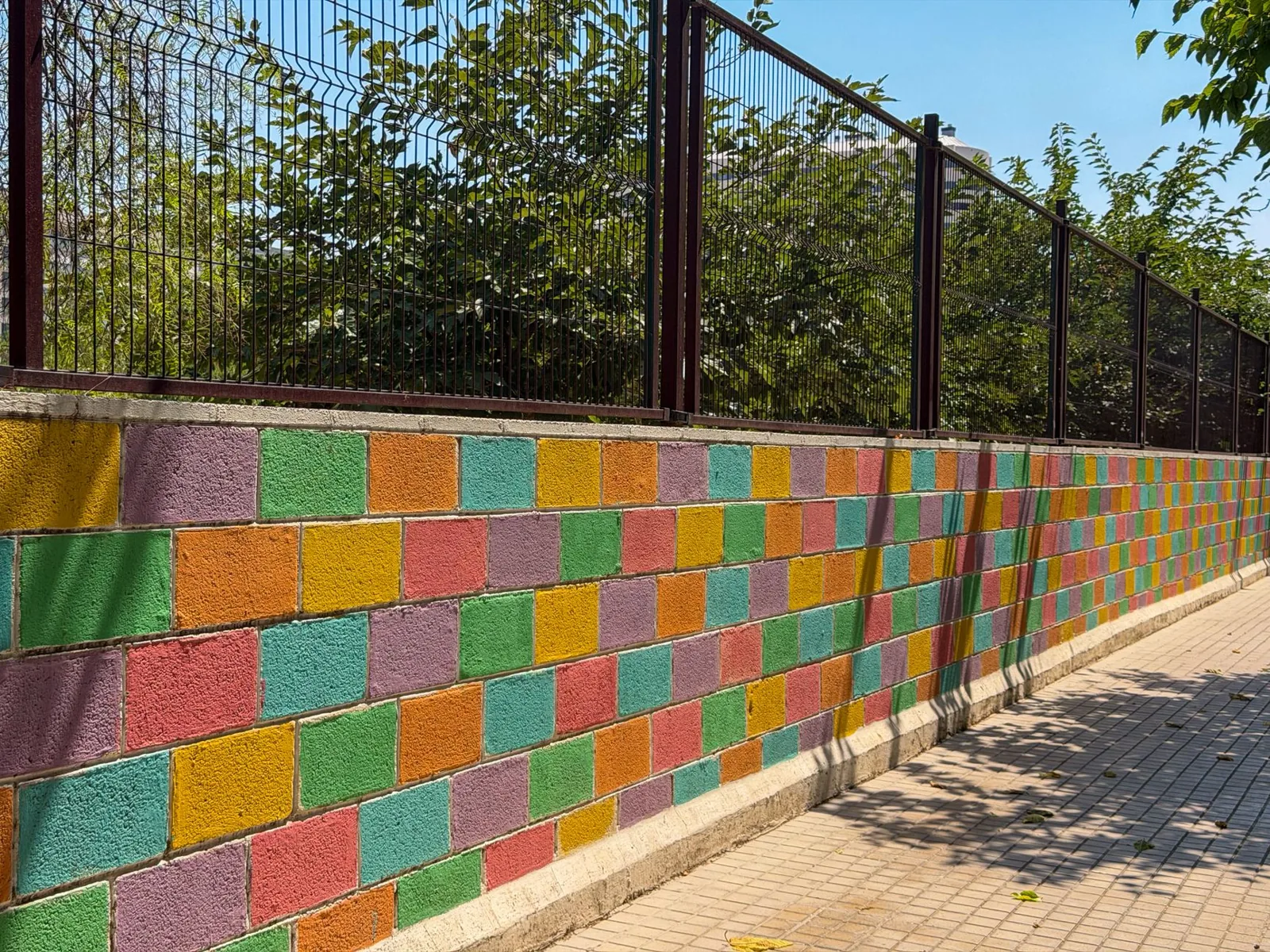
Photo by Rafael Minguet Delgado via Pexels
Drainage: Where the Two Diverge
This is the part most first-timers get wrong. Water is the number one killer of retaining walls. When soil behind a wall gets saturated, it expands, freezes, and pushes outward with more force than the wall was designed to take. That’s why every properly built wall includes a drainage package: clean gravel backfill, a perforated drain pipe at the base, and weep holes or a drain outlet that lets water escape.
Skip the drainage and even an expensive wall can bulge, crack, or tip within a decade. If you already have drainage trouble in the yard, pair the wall with a perimeter solution — our French drain cost per foot guide covers what that runs.
A fence doesn’t need any of this because it isn’t holding anything back. The only drainage consideration with a fence is keeping the bottom rail off the ground and grading the soil so water doesn’t pond around the posts, which shortens their life.
Permits, Codes, and Engineering
Here’s the rule of thumb: under about 3 to 4 feet, a retaining wall is usually a DIY-friendly project that may not need a permit, though many municipalities still want one. Over 4 feet — or any wall holding a surcharge like a driveway or house above it — you should expect to need a permit and a stamped engineer’s design. Tall walls also need geogrid reinforcement and, in some cases, a poured footing.
Fences are simpler. Most towns let you build a standard 4- to 6-foot fence with nothing more than a zoning check, since fence height, setback, and material rules are the main concerns. The catch is the property line: get a survey before you dig, because rebuilding a fence that’s a foot onto the wrong side of the line is a costly and awkward fix.
If your wall is showing cracks or leaning, don’t wait — a small repair is far cheaper than a rebuild. See retaining wall repair cost for what fixes typically run.
How to Choose for Your Property
The decision usually comes down to three questions.
- Is there a slope to hold? If the ground drops more than a foot or two and you want a flat, usable space, you need a wall — a fence won’t fix grade.
- Do you mainly want privacy? On flat ground, a fence is the obvious, cheaper answer.
- Is water moving through the site? If so, the wall needs a proper drainage plan from day one, or it will fail early.
When you need both jobs done, stack them: build the retaining wall first, then run the fence along the top of it. That gets you a level yard, a stable privacy screen, and a cleaner property line without either structure fighting the other. The American Society of Landscape Architects has useful guidance on retaining wall design basics, and This Old House covers how to build a retaining wall step by step.
Frequently Asked Questions
Is a retaining wall more expensive than a fence?
Yes, by a wide margin. A fence typically runs $15 to $50 per linear foot installed, while a retaining wall of meaningful height runs $100 to $300 per linear foot because of the excavation, base, backfill, and drainage it requires.
Can I put a fence on top of a retaining wall?
Yes, and it’s a common solution on sloped lots. The key is leaving enough room behind the wall for the fence posts to be set properly, and accounting for the extra wind load on the posts. Check local codes, which sometimes treat the combined height of wall plus fence against the height limit.
Do I need a permit for a retaining wall?
Usually, once it passes about 4 feet in height or holds a surcharge, yes — many jurisdictions want a permit and an engineered design. Short walls under 3 to 4 feet often fall below the threshold, but always confirm with your local building department.
How long does a retaining wall last compared to a fence?
A masonry retaining wall lasts 50 to 100-plus years; a wood fence lasts 10 to 20. Vinyl and metal fences can reach 30 years or more, but the wall is the far more durable structure when both are built correctly.
What’s the most common reason retaining walls fail?
Poor drainage. Without gravel backfill, a drain pipe, and weep holes, water builds up behind the wall and pushes it over, cracks it, or tips it. Most wall failures are drainage failures, not structural ones.
The Bottom Line
Retaining wall vs fence isn’t really a contest between two interchangeable options — it’s a question of what your yard actually needs. If you have grade to manage and want flat, usable space, build the wall and do its drainage right. If you want privacy, security, or a clean boundary on mostly flat ground, put in the fence and save your budget for something else. When the site needs both, stack a fence on a properly drained wall and get the best of each.