Yard Drainage Cost Per Foot: What Homeowners Actually Pay
Standing water in your yard isn’t just an eyesore—it’s slow damage. It kills grass, seeps toward your foundation, and breeds mosquitoes. The good news is that fixing it usually costs less than the foundation repair you’d eventually need. Most homeowners spend between $12 and $50 per linear foot on surface drainage and $40 to $100+ per linear foot on buried systems like French drains, which puts a full yard drainage project between roughly $1,500 and $8,000 depending on how much water you’re moving.
The keyphrase you keep running into—yard drainage cost per foot—gets quoted in wildly different ways depending on who’s asking. A landscaper pricing a simple swale gives you one number; a drainage contractor pricing a French drain wrapped in filter fabric gives you another. Here’s the honest breakdown, with real ranges you can plug into a budget.
What follows assumes standard residential conditions: relatively flat to gently sloped yards, access for a small excavator or trencher, and soil that drains at least somewhat. Rocky ground, tree roots, and long runs to a daylight point all push the per-foot number higher.
What Drives Yard Drainage Cost Per Foot?
Four things move the per-foot price more than anything else: method, depth, materials, and site access. Understanding each one stops you from being surprised when a quote comes back.
- Method. A shallow surface channel drain with a plastic grate runs $12 to $30 per foot. A French drain—perforated pipe in a gravel-filled trench—runs $25 to $100 per foot because it needs digging, stone, fabric, and pipe. You’re paying for how much water the system is designed to handle, not just for a trench.
- Depth and width. Going from a 12-inch trench to an 18-inch or 24-inch trench can nearly double labor. Deeper trenches mean more spoil to haul, more stone to fill, and often shoring in softer soil.
- Materials. Corrugated HDPE pipe is cheap. Rigid PVC with a smooth interior moves water better and costs more. Filter fabric, washed gravel (typically #57 stone), and catch basins all add line items. A simple pop-up emitter at the end of a downspout line runs $30 to $80 in parts; a catch basin with a sediment bucket runs $60 to $150.
- Access and soil. If the crew can’t get a mini-excavator to the area, everything goes up because digging is done by hand. Rocky or clay-heavy soil slows the work. Every extra hour is money.
None of these are optional upgrades in the gimmicky sense—each one changes whether the system actually works. The cheapest quote is often the one that clogs in two years.
Average Yard Drainage Costs by Method
Here’s what you should expect to pay per linear foot, broken down by the most common systems.
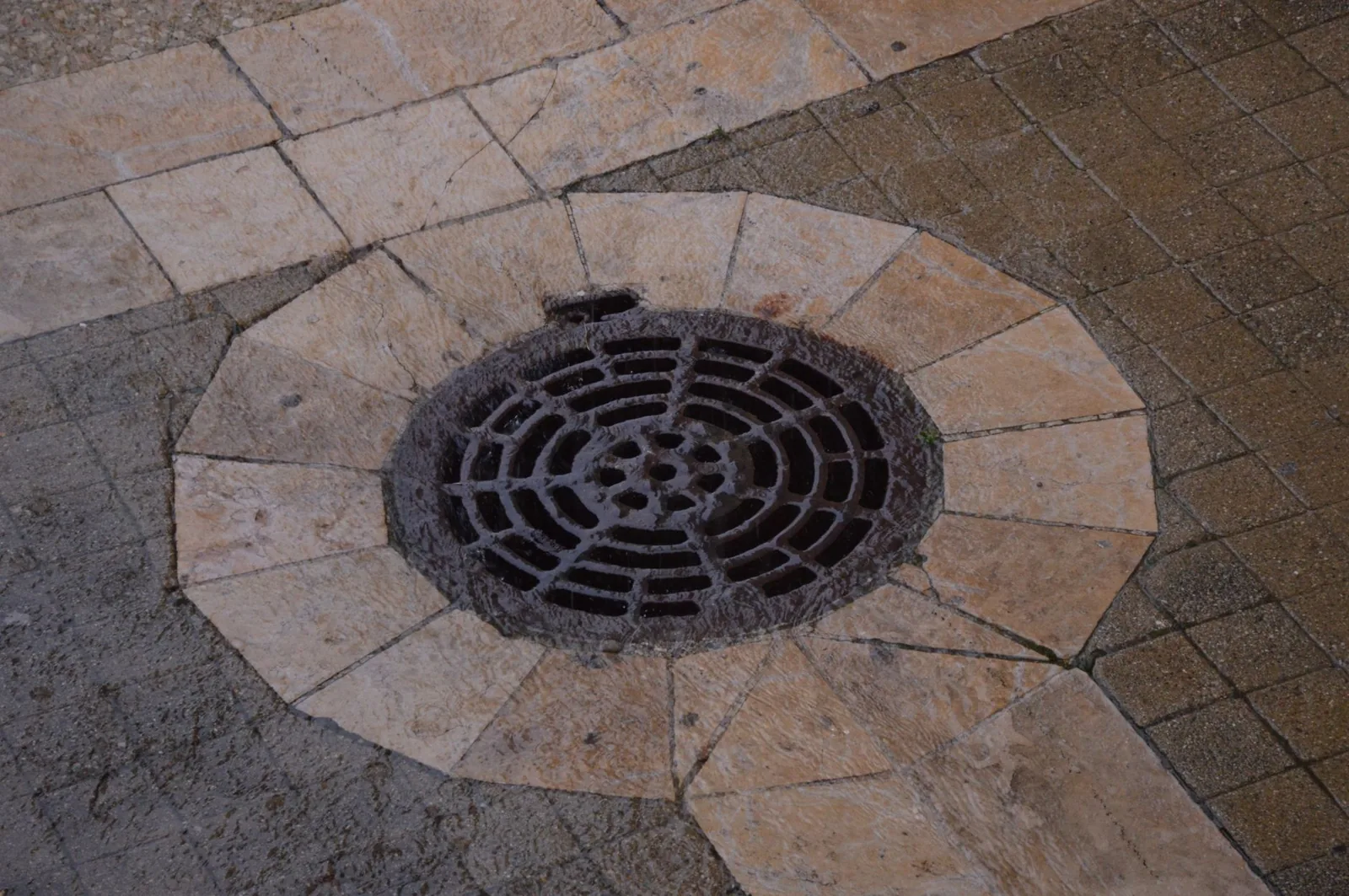
Photo by Ulrick Trappschuh via Pexels
Surface Channel Drains
Shallow plastic or metal channels with grates, used to catch water across a driveway, patio, or low spot. They’re the cheapest option and the easiest to DIY.
- Cost per foot: $12 to $30
- Typical project: $800 to $2,500
- Best for: Flat, paved, or hardscape areas where water pools in a specific line
French Drains
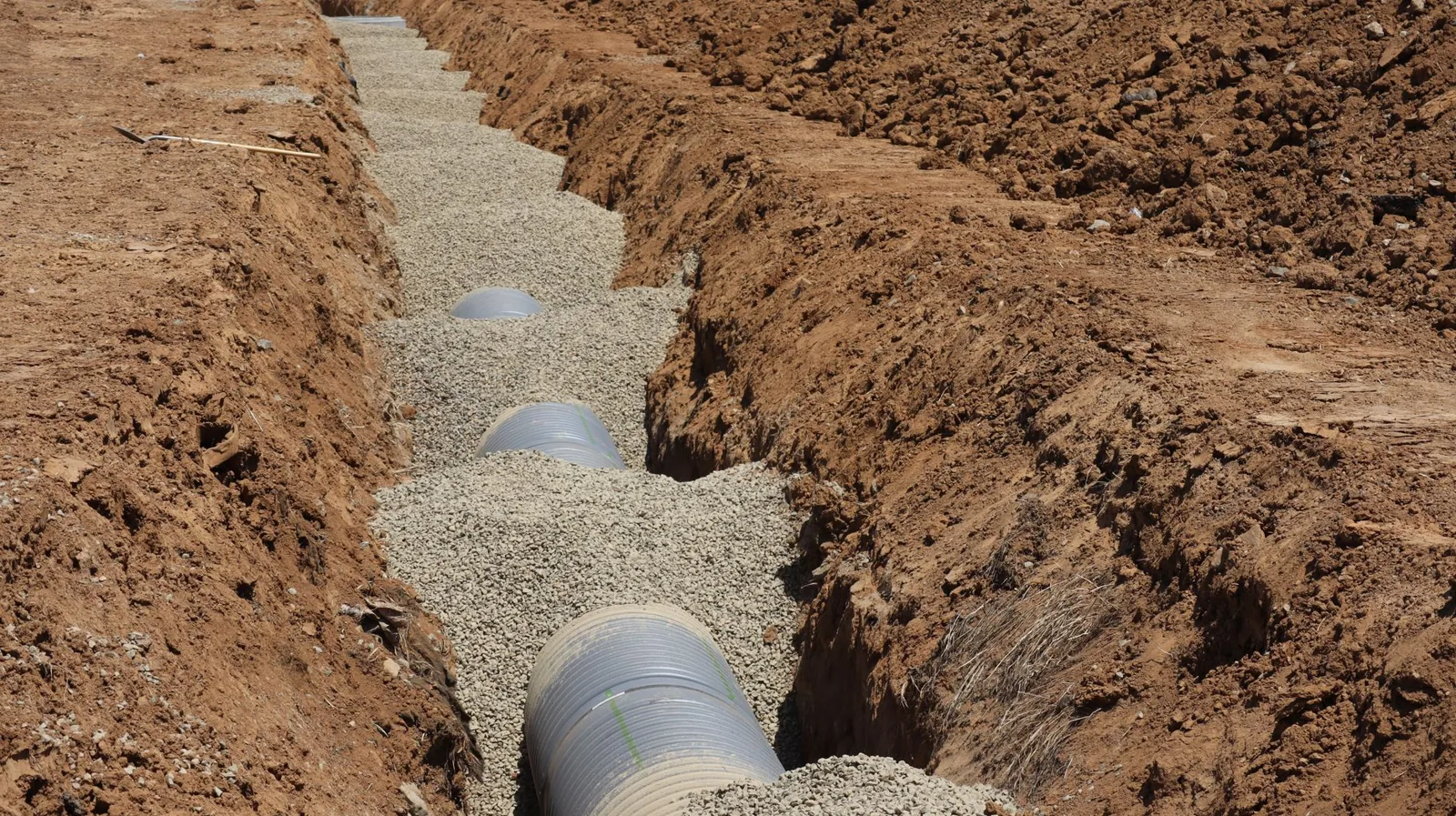
A gravel trench with perforated pipe that captures and redirects subsurface water. The workhorse of yard drainage and the most common fix for a soggy lawn or a wet foundation perimeter.
- Cost per foot: $25 to $100
- Typical project: $2,500 to $8,000
- Best for: Soggy lawns, foundation protection, downhill runoff
Downspout Extensions and Buried Lines
Redirecting a single gutter downspout away from the house, either with a surface extension or a buried solid-pipe run to a pop-up emitter.
- Cost per foot: $10 to $25 (buried solid pipe)
- Typical project: $150 to $800 per downspout
- Best for: Water pooling at a specific corner of the house
Dry Wells and Catch Basins
A buried perforated tank or gravel pit that collects water and lets it percolate slowly into the soil, often paired with a catch basin at a low point.
- Cost per unit: $1,200 to $3,500 installed
- Typical project: $2,000 to $6,000 with connecting pipe
- Best for: No safe daylight point for runoff, or clay soil
| Feature | Surface Channel Drain | French Drain | Dry Well |
| — | — | — |
| Cost per foot | $12–$30 | $25–$100 | $1,200–$3,500 (per unit) |
| Handles subsurface water | No | Yes | Yes |
| DIY difficulty | Low | Moderate–High | High |
| Lifespan | 10–20 years | 20–40 years | 20+ years |
| Best use | Hardscape pooling | Soggy lawn, foundation | No outlet available |
How to Estimate Your Own Project Total
Take the per-foot number and multiply it by the actual linear footage, then add the fixed costs everyone forgets.
- Measure the run. Walk the path the water should take, from the problem spot to wherever it can safely discharge—a storm drain, a daylight point at the curb, or a dry well. Don’t guess; a 60-foot French drain at $50 per foot is $3,000, and guessing wrong by 20 feet is a $1,000 miss.
- Count the fittings. Catch basins, pop-up emitters, cleanouts, and connectors each add $30 to $150. A single French drain with two catch basins and a cleanout can add $300 to $500 beyond the raw pipe cost.
- Add the access fee. Many contractors have a minimum—often $500 to $1,500—to cover bringing a machine and crew to the site, which is why small jobs always look expensive per foot.
- Budget for restoration. Once the trench is backfilled, you still need seed, sod, or stone to cover it. Figure $1 to $5 per square foot over the disturbed area.
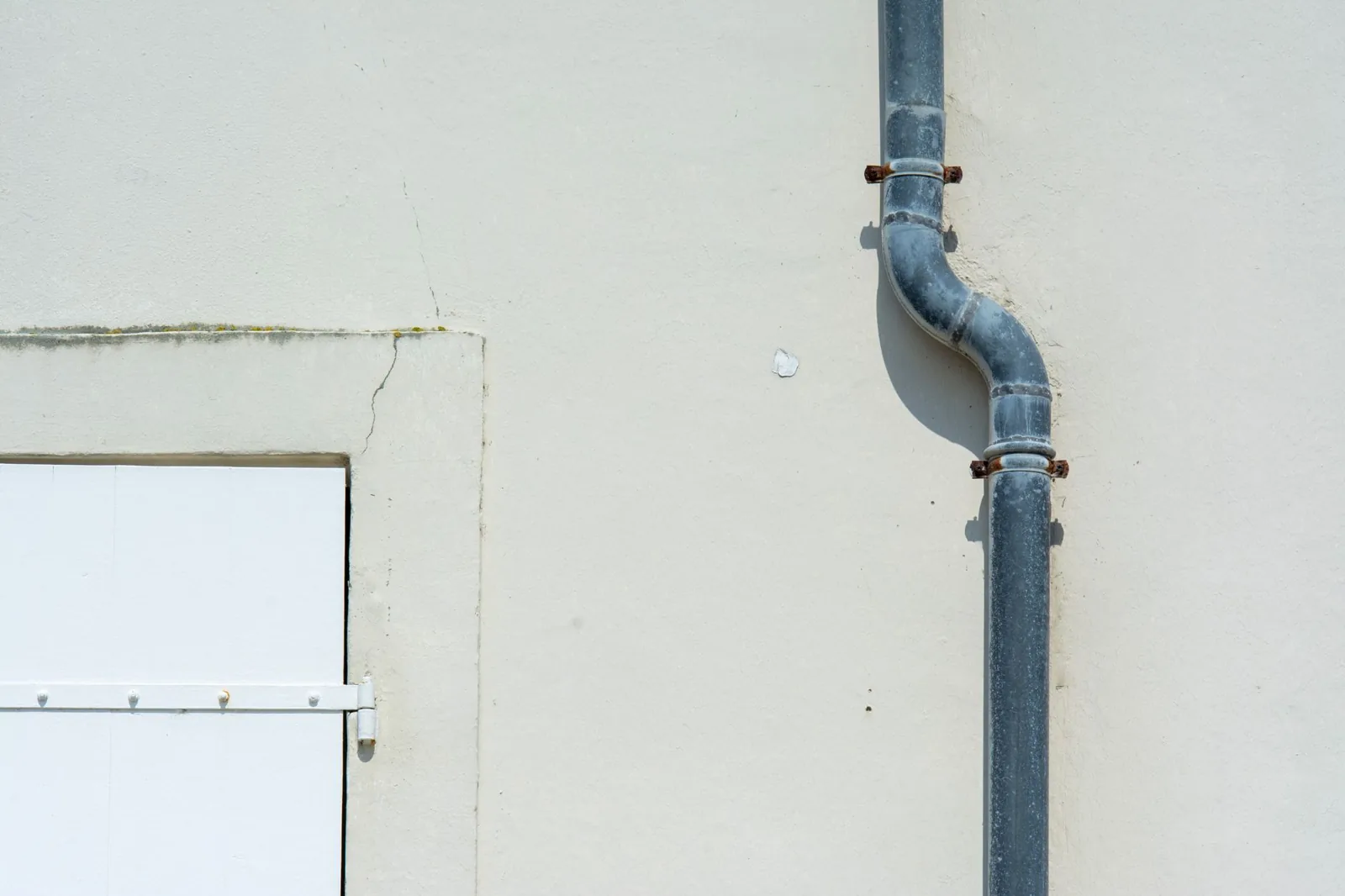
Photo by Jan van der Wolf via Pexels
A realistic budget formula looks like this: (linear feet × per-foot price) + fittings + site minimum + restoration. For a typical 50-foot French drain with two catch basins, that’s roughly (50 × $50) + $400 + $800 + $300, or about $4,000 all in. That’s the number to put in front of a contractor, not the raw per-foot figure.
French Drains vs. Surface Drains vs. Dry Wells
Choosing the right system is worth more than shopping for the lowest per-foot price. Each one solves a different problem.
Surface drains move water that’s already on top of the ground. They’re fast, cheap, and visible. If your issue is a low spot on the lawn or water running across a walkway, this is almost always the right answer, and you can install many of them yourself in a weekend.
French drains move water that’s moving under the surface. A lawn that stays squishy for days, a basement that seeps, or a slope that feeds water toward the house all point to a French drain. They cost more per foot because the trench is deeper and filled with stone and filter fabric. If you’re on the fence, read our guide to French drain cost per foot for a closer look at the material and labor split.
Dry wells handle water that has nowhere to go. If your yard drains toward a low corner with no street access and the soil is clay, a dry well or a gravel pit gives the water a place to sit and soak. They’re the most expensive per unit because they’re essentially an underground tank.
The common mistake is treating all three as interchangeable. A surface drain installed where you need a French drain just moves the puddle 10 feet away; a French drain installed where you need a dry well fills up and stops working.
Signs Your Yard Needs Drainage Work Now
Drainage problems rarely announce themselves. They accumulate, and by the time they’re obvious, the damage has usually started. Here’s what to watch for.
- Standing water that lasts more than 24 hours after rain
- Squishy or spongy lawn even on dry days
- Water stains or efflorescence on basement or crawl-space walls
- Mosquitoes concentrated in one part of the yard
- Grass dying in patches while surrounding areas stay healthy
- Soil pulling away or settling near the foundation, or cracks in walkways
If you see any two of these together, get an assessment sooner rather than later. Water sitting against a foundation is directly tied to the kind of structural issues covered in our piece on retaining wall cost per linear foot—and by extension, retaining wall installation cost—because a wall holding back a soggy slope is a wall working twice as hard.
DIY vs. Hiring a Pro
You can save real money here, but only on the shallow end of the pool.
DIY-friendly projects. Surface channel drains, shallow downspout extensions, and re-grading small areas with a shovel and a tamper are all reasonable weekend jobs. Materials for a 30-foot channel drain run about $300 to $600, and the main cost is your time. You’ll need a level, a trenching shovel, landscape fabric, and a willingness to get the slope right—generally a 1% to 2% grade, or about 1 to 2 inches of drop for every 8 feet of run.
Call a pro for. French drains deeper than about 18 inches, dry wells, anything within 5 feet of the foundation, or any project where the discharge point requires cutting through a curb or tying into a storm system. The pro’s trenching machine and their ability to set a consistent grade are the difference between a drain that works for 30 years and one that holds water. French drains that backfill wrong are one of the most common rework jobs contractors see.
Expect labor to be 50% to 70% of a pro’s quote. On a $4,000 French drain job, that’s $2,000 to $2,800 in labor—the number you’re essentially trying to replace if you DIY. If your back can’t take a day of trenching, that labor cost is money well spent.
Frequently Asked Questions
How much does yard drainage cost per foot on average?
Most homeowners pay $12 to $50 per linear foot for surface drainage and $40 to $100 per linear foot for French drains. Small jobs skew higher per foot because of contractor minimums.
Is a French drain worth the higher cost per foot?
Yes, if the water is moving under the surface or pooling against your foundation. The higher per-foot price buys a deeper trench, washed gravel, filter fabric, and perforated pipe that move water for decades. For surface pooling alone, a cheaper channel drain usually does the job.
Can I install my own yard drainage?
You can handle surface channel drains, shallow downspout extensions, and minor re-grading. Deeper French drains, dry wells, and anything near the foundation are worth hiring out—getting the grade and the fabric right is hard to fix after the trench is closed.
How long does a drainage system last?
A well-installed French drain with filter fabric lasts 20 to 40 years. Surface channel drains typically last 10 to 20 years. The biggest killer is sediment clogging the pipe, which proper fabric and cleanouts prevent.
Does yard drainage add value to my home?
Indirectly, yes. A dry, usable yard is easier to sell, and a working drainage system protects the foundation—arguably the most expensive component of the house to repair. Buyers notice standing water and often walk away from it.
The Bottom Line
Yard drainage cost per foot is the wrong number to anchor on by itself—it’s a starting point, not the final price. Surface solutions run $12 to $30 per foot, French drains $25 to $100 per foot, and dry wells cost thousands per unit. The real total comes from linear footage, fittings, a contractor’s site minimum, and the restoration work that covers the trench afterward.
Figure out what kind of water problem you have—surface, subsurface, or nowhere-to-go—before you collect quotes. That single decision matters more than the per-foot price, because the wrong system just moves the problem and drains your budget twice. Get two or three written quotes, ask each contractor where the water will actually discharge, and make sure the quote includes backfill and restoration so there are no surprises.
For more on the systems that pair with good drainage—especially on sloped lots—see our guides to French drain cost per foot and retaining wall cost per linear foot. The EPA’s guide to managing stormwater at home and This Old House’s drainage overview are both solid references before you call a contractor.
A dry yard is one of the cheapest insurance policies you can buy for a house. It just takes knowing which system you need—and what it should cost per foot.