Built In BBQ vs Freestanding Grill: Which Belongs in Your Backyard?
A built in BBQ vs freestanding grill decision shapes how you cook outdoors for the next decade. One locks into a countertop and costs several thousand dollars to install; the other rolls into place on wheels and can follow you to the next house. Both turn out great burgers and steaks, but they serve very different homeowners.
The honest answer is that neither is objectively better. A built-in grill wins on looks, resale appeal, and a permanent cooking surface that shrugs off wind. A freestanding grill wins on price, flexibility, and the freedom to change your mind. Most of the decision comes down to three things: your budget, how long you plan to stay in the home, and whether you are building a full outdoor kitchen or just upgrading the grill you already own.
Here is how to think through the choice so you spend your money where it actually pays off.
What Is the Difference Between a Built In BBQ and a Freestanding Grill?
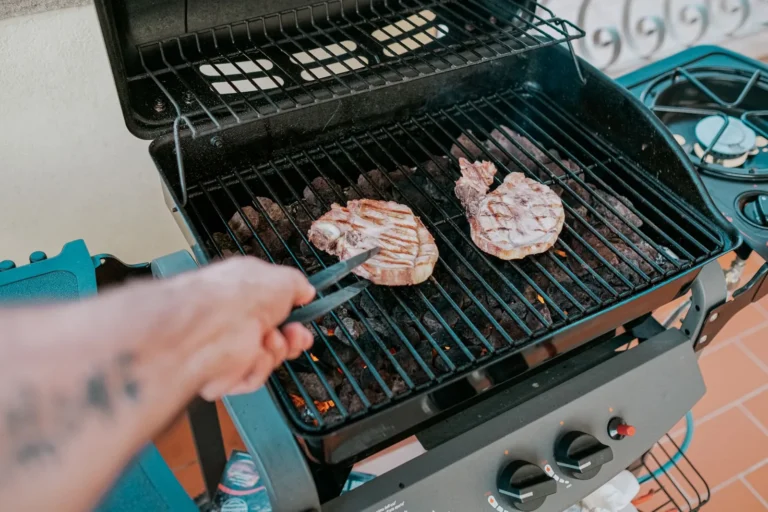
A freestanding grill is exactly what it sounds like: a self-contained unit that sits on wheels or a cart, connects to a propane tank or a natural gas line, and can be moved around your patio. Brands like Weber, Napoleon, and Broil King dominate this category. Prices typically run from about $300 for a basic propane kettle or two-burner model to $3,000 or more for a full-size five-burner gas grill with a side burner.
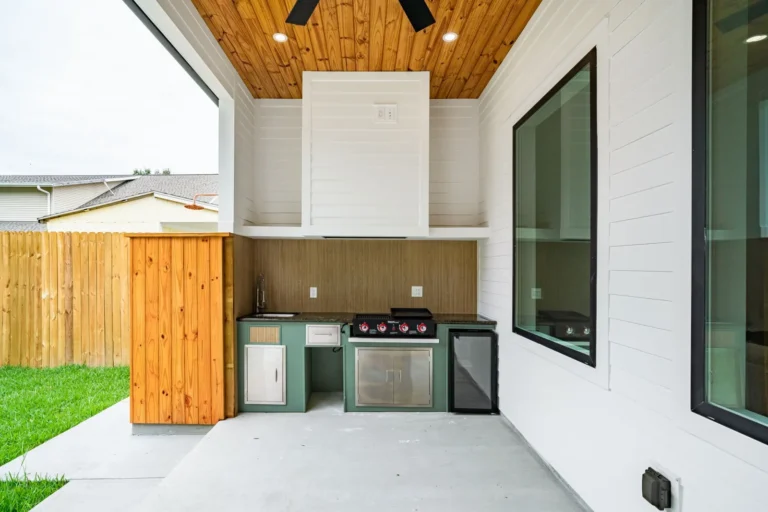
A built-in BBQ is a grill head that gets mounted into a permanent structure, usually a masonry or stainless steel island with a granite, tile, or concrete countertop. The cart, wheels, and side shelves are gone; the grill body drops into a cutout and gets wired to a fixed gas line. Built-in grills come from makers like Blaze, Lynx, Coyote, and Summerset, and the grill head alone typically starts around $1,500 and can push past $8,000 for a premium 40-inch-plus model. That price does not include the island it sits in.
The practical differences go beyond price. Built-in grills are heavier, often 200 to 400 pounds, and built with thicker 304 stainless steel because they are exposed to the elements year-round with no cover cart to protect them. Freestanding grills are lighter, easier to cover or roll into a garage, and far simpler to replace when they wear out.
Built In BBQ vs Freestanding Grill: Cost Comparison
The sticker price on the grill is only part of the story. A built-in requires an island, a countertop, and often a professional gas line hookup, which adds thousands in labor and materials. A freestanding grill usually needs nothing more than a propane tank swap or a quick connection to an existing natural gas stub.
Here is how the two options stack up for a typical mid-range setup:
| Feature | Built In BBQ | Freestanding Grill |
|---|---|---|
| Grill head cost | $1,500–$8,000+ | $300–$3,000+ |
| Island/countertop | $2,000–$8,000 | Not needed |
| Gas line / hookup | $300–$1,200 (pro) | $0–$300 |
| Installation labor | $500–$2,500 | Minimal (DIY) |
| Total, typical range | $4,000–$20,000 | $300–$4,000 |
| Move it later? | No | Yes |
For full context on what a permanent outdoor kitchen really costs, see our breakdown of outdoor kitchen cost per linear foot.
The gap is real: a decent built-in setup often lands in the $4,000 to $12,000 range all-in, while a solid freestanding grill with a good cover runs under $1,500. If you are financing or stretching a budget, that difference decides the question for you before you look at a single feature list.
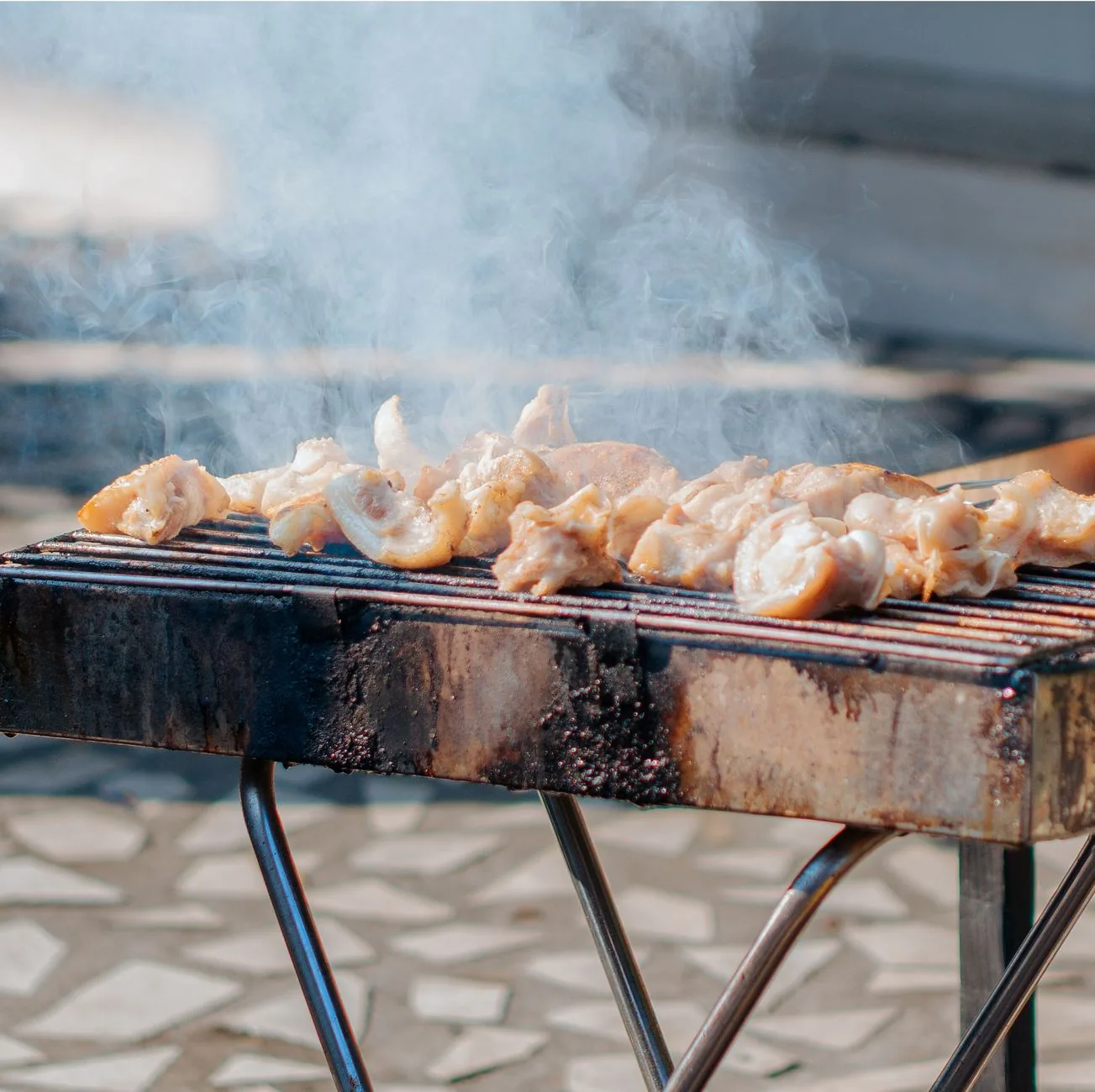
Photo by Clarence Gaspar via Pexels
The Case for a Built In BBQ
The strongest reason to go built-in is that it turns a grill into a permanent feature of the home. When you build an island around it, you get a dedicated prep surface, storage for tools and propane, and a finished look that reads as an outdoor kitchen rather than a grill sitting on a patio.
Built-in grills also hold up better in exposed locations. Because the grill head is anchored and the surrounding island blocks wind from two or three sides, burners hold temperature more consistently on gusty days. The thicker stainless construction resists the salt air and rain that would corrode a cheaper cart model in a few seasons. Homeowners in coastal areas or places with hard winters often find that a built-in outlasts two or three freestanding grills over the same span.
There is also a resale angle. A well-built outdoor kitchen is a legitimate selling feature in warm-climate markets, and buyers tend to view a built-in grill as part of the house rather than an appliance they will have to replace. You will not recover every dollar, but you are more likely to get a meaningful return than you would on a wheeled grill. If you are already planning a full build, start with our guide to how much an outdoor kitchen costs to build.
The trade-offs are equally clear. Built-ins are expensive, permanent, and harder to repair. If the ignition or burners fail out of warranty, replacement parts and service calls cost more than simply wheeling a new freestanding unit into place.
The Case for a Freestanding Grill
For most homeowners, a freestanding grill is the smarter starting point. It costs a fraction of a built-in, it is ready to cook the day you bring it home, and it gives you full freedom to relocate or upgrade.
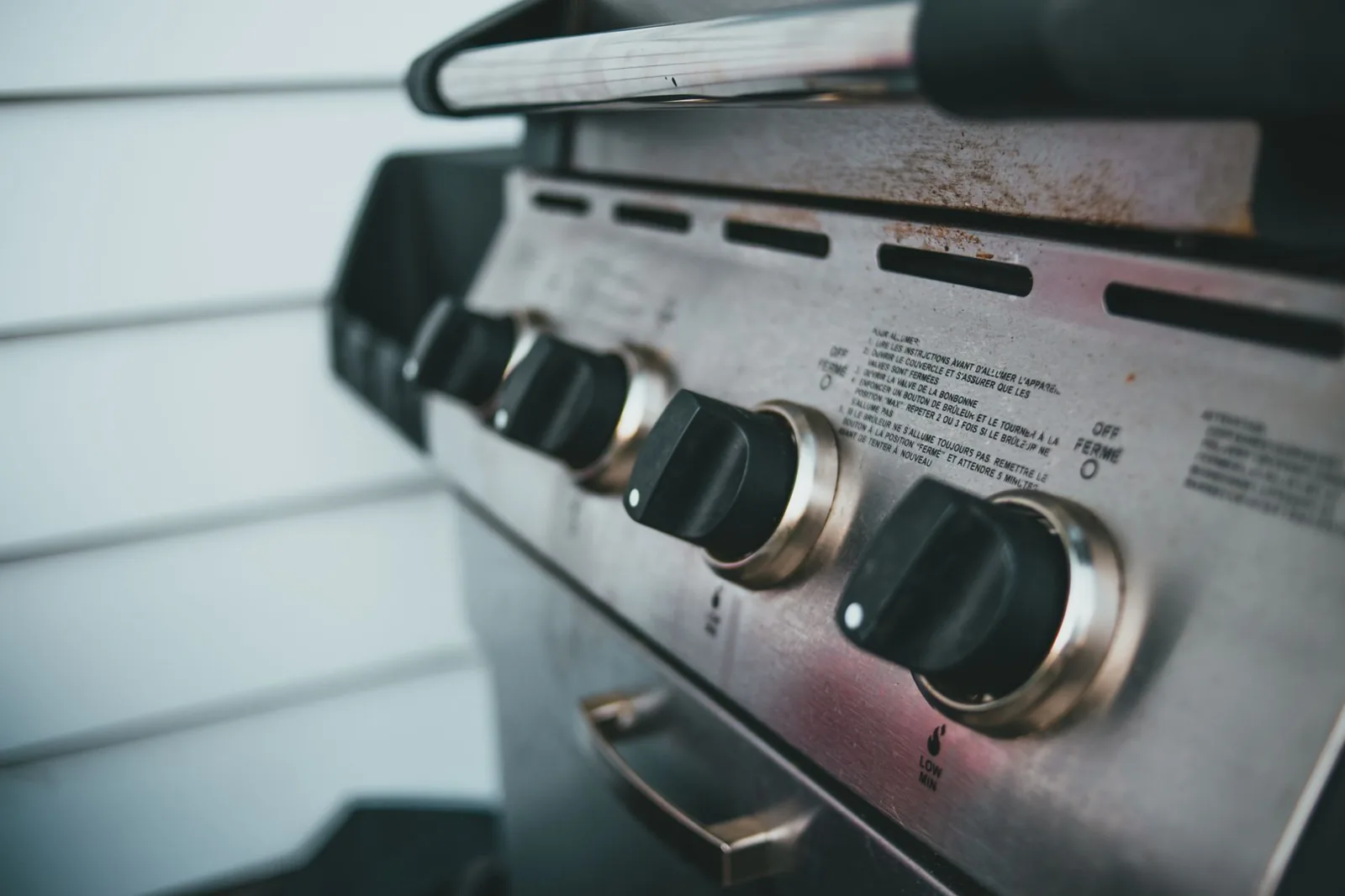
Photo by Erik Mclean via Pexels
Flexibility is the underrated advantage. Renters and people who expect to move within five years should almost always buy freestanding, because a built-in grill does not come with you and rarely pays for itself in a quick sale. Even long-term owners benefit: you can start with a $600 propane grill, learn how much you actually cook outside, and decide later whether a permanent kitchen is worth the money.
Modern freestanding grills also close most of the performance gap. A quality four- or five-burner gas grill in the $800 to $1,500 range gets hot enough to sear, holds heat through the lid, and offers side burners, rotisserie kits, and infrared sear zones that were once premium built-in features. For the vast majority of backyard cooking, a freestanding unit does everything a built-in does at a third of the cost.
The main downsides are cosmetics and longevity. A freestanding grill on wheels looks like a grill on wheels, not a kitchen, and its thinner steel and exposed cart will show rust and wear faster if left uncovered in rain or coastal air.
Installation, Permits, and Site Prep
Installation is where the built in BBQ vs freestanding grill gap gets widest, and where people blow their budget.
A freestanding grill needs almost no prep. Place it on a level, non-flammable surface, keep it away from eaves and siding per the manufacturer’s clearance specs, and either hook up a propane tank or connect a natural gas conversion kit. Many homeowners can be cooking within an hour of unboxing. Natural gas hookups that require running a new line should be done by a licensed plumber, which typically runs $300 to $700.
A built-in grill demands planning. You need a stable base (usually a concrete pad or reinforced deck), a framed or masonry island, a countertop, and a permanent gas line run by a professional. This Old House covers the gas-line and clearance requirements in its outdoor kitchen guides. If you live in a regulated area, you may need a building permit, especially for gas work and any electrical for lights or outlets. Budget $500 to $2,500 in labor alone, and do not assume your existing patio can support a 500-pound island without reinforcement. For a closer look at what contractors charge, see outdoor kitchen installation cost.
Durability, Weather, and Maintenance
Both grills last longer when covered and cleaned, but they age differently.
A built-in grill is engineered for permanent outdoor exposure. High-end heads use 304 stainless steel throughout, with welded seams and sealed burners that resist corrosion. The island that houses it also protects the grill’s underside from ground moisture. With a fitted cover and seasonal cleaning, a quality built-in can serve 15 years or more.
A freestanding grill is more vulnerable because the whole cart sits in the weather. Even “stainless” budget models often use lower-grade 430 steel or painted steel that will eventually rust in humid or coastal climates. A good cover, regular grate cleaning, and emptying the grease tray make a big difference, but you should expect to replace a freestanding grill every 5 to 10 years under heavy use. Family Handyman has a solid rundown on cleaning and protecting a grill through the winter that applies to both styles.
Maintenance cost follows the same pattern. Built-in replacement parts—burners, igniters, valves—are pricier and sometimes brand-specific, while freestanding grills are cheap to fix or simply replace. If you are adding a fire feature to the same space, a fire pit installation cost guide can help you budget the whole project together.
Frequently Asked Questions
Is a built in BBQ worth the extra money?
It depends on how long you will stay and how much you cook outdoors. If you are building a permanent outdoor kitchen in a home you plan to keep for years, the durability and resale appeal can justify the cost. If you might move soon or only grill occasionally, a freestanding grill is the better value.
Can I convert a freestanding grill to a built-in?
Not directly. Freestanding grills need airflow around the cart and are not rated for enclosure, so dropping one into an island is a fire hazard. Buy a dedicated built-in grill head, which is designed for the cutout and clearances.
Do built in BBQs last longer than freestanding grills?
Generally yes. Built-in grill heads use thicker, higher-grade stainless and sit protected inside an island, so they often outlast freestanding models in harsh weather by several years.
How much does a built in BBQ cost compared to a freestanding grill?
A freestanding grill typically runs $300 to $4,000, while a built-in setup with the island and gas hookup usually lands between $4,000 and $20,000 all-in.
Do I need a permit for a built in BBQ?
Often yes, primarily for the permanent gas line and any electrical work. Check with your local building department before starting; a freestanding propane grill usually needs no permit.
The Bottom Line
Choose a built in BBQ if you are building a real outdoor kitchen, you plan to stay in the home for the long haul, and you want a permanent cooking surface that adds to the property. Choose a freestanding grill if you want great food at a fraction of the cost, you value the option to move or upgrade, or you are still figuring out how much outdoor cooking you will actually do.
For most homeowners, the smart sequence is to start freestanding, cook through a few seasons, and only commit to a built-in once the habit—and the budget—are proven. Either way, buy the best grill your budget allows, cover it, and clean it, and you will get years of good meals out of it.
For more on what a permanent setup really costs, see how much an outdoor kitchen costs to build or the outdoor kitchen installation cost guide before you call a contractor.