Saltwater Pool Cost vs Chlorine: Which Is Cheaper Long-Term?
The saltwater pool cost vs chlorine debate usually comes down to one question: is the higher upfront price of a saltwater system worth the lower day-to-day maintenance? The short answer is yes for a lot of homeowners, but it is not the slam dunk the marketing sometimes makes it out to be.
A saltwater pool is not a chlorine-free pool. A salt chlorine generator (SCG) converts dissolved salt into chlorine on a continuous basis, so you are still running a chlorine pool — you just stop buying, storing, and handling chlorine yourself. That distinction matters, because it changes both the numbers and how you maintain the water.
Here is the honest breakdown of what each system costs to buy, run, and repair, so you can pick the one that fits your budget and your patience for chemistry.
How a Saltwater Pool Works
A traditional pool depends on you adding chlorine — tablets in a floater or feeder, granular shock, or liquid chlorine — on a weekly schedule. When the chlorine is used up fighting bacteria and algae, you add more.
A saltwater pool replaces that manual routine with an inline salt chlorine generator. The generator sits in your plumbing, and as salted water passes over its electrolytic cell, a small electrical current splits the salt (sodium chloride) into chlorine and sodium. The chlorine sanitizes the water, then recombines back into salt, so the salt itself is not really “used up” — you only top it off after rain, backwashing, or splash-out.
You still add a few bags of pool salt at startup (usually 2,700 to 3,400 parts per million, depending on the cell manufacturer), and you still test the water. You just do far less of it.
Upfront Costs: Saltwater Pool Cost vs Chlorine
This is where the two systems diverge the most. A traditional chlorine pool needs no extra equipment, so its upfront cost is essentially zero beyond the pool itself.
| Feature | Saltwater Pool | Traditional Chlorine Pool |
|---|---|---|
| Upfront equipment | $500–$2,500 for the generator, plus $300–$500 installation | $0 — no extra equipment |
| Typical total conversion cost | $1,500–$2,500 installed | N/A (nothing to install) |
| Startup chemicals | $50–$150 for 8–15 bags of pool salt | $75–$150 for shock, stabilizer, and tablets |
| First-year investment | $1,600–$2,650 | $75–$150 |
A quality salt chlorine generator from a name like Hayward, Pentair IntelliChlor, or CircuPool runs roughly $600 to $1,800 for the unit alone, and many pool owners spend another $300 to $500 on professional installation if they do not want to cut into their own plumbing. Budget brands exist, but a cheap cell tends to have a shorter lifespan, which eats the savings later.
If you are building a new pool, most builders charge $1,500 to $2,500 to spec a salt system instead of a standard chlorinator. On an existing pool, a conversion is a one-day job for a technician: cut the return line, wire the control box, add salt, and balance the water.

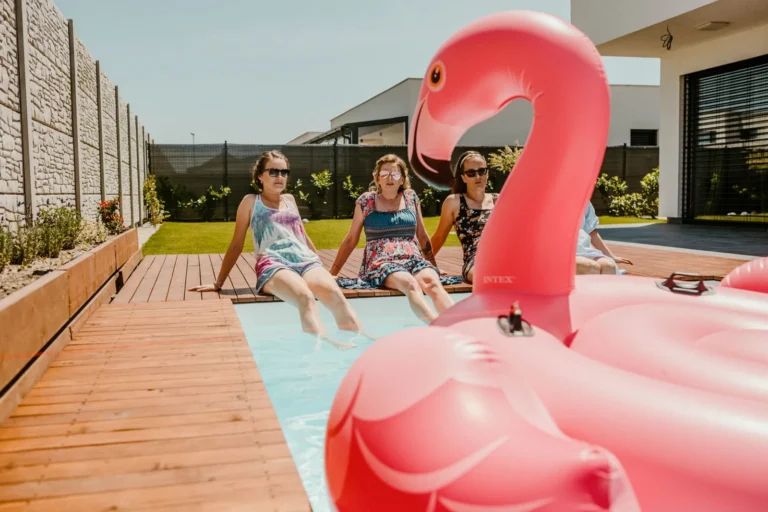
Photo by Sarah Schorer via Pexels
Ongoing Maintenance Costs
The real argument for salt is here. Chlorine prices have climbed sharply in the last several years, and the cost of tablets, shock, and stabilizer for a typical 15,000- to 25,000-gallon pool now lands between $300 and $800 a year — more if you battle algae or live in a hot, sunny climate where chlorine burns off fast.
Saltwater pools flip that recurring cost. A 40-pound bag of pool salt runs $6 to $12, and a typical pool needs only two to six bags a year to replace what splashes out or gets backwashed. That is $25 to $75 a year in salt for most owners.
The trade-off is electricity. A salt chlorine generator draws power only while the pump is running, and on a 110-volt system that usually works out to $100 to $200 a year. You can cut that by running the pump during off-peak hours, but you cannot eliminate it — the cell only makes chlorine while water is moving through it.
Equipment Lifespan and Replacement Costs
The expense people forget in the saltwater pool cost vs chlorine calculation is the cell itself. A salt cell is a consumable. Depending on use and sizing, it lasts 3 to 7 years — roughly 10,000 hours of run time — and a replacement cell costs $500 to $900.
Amortized over a five-year cell life, that is $100 to $180 a year, which roughly cancels out the chemical savings for a small pool. On a larger pool, where chlorine would cost $600 to $800 a year anyway, the salt system still comes out ahead.
Traditional chlorine pools have no equivalent hidden cost. The feeder or floater costs $20 to $80 and lasts for years, and there is no powered cell to burn out.
One more line item: salt is mildly corrosive. Metal ladders, pool lights, and — most expensively — the heater can wear faster in saltwater, especially if the pool uses softer metals or the pH drifts. A sacrificial zinc anode ($40 to $80) is cheap insurance, and modern heaters are built with cupronickel exchangers that shrug off salt, but it is still worth budgeting for if your equipment is older.
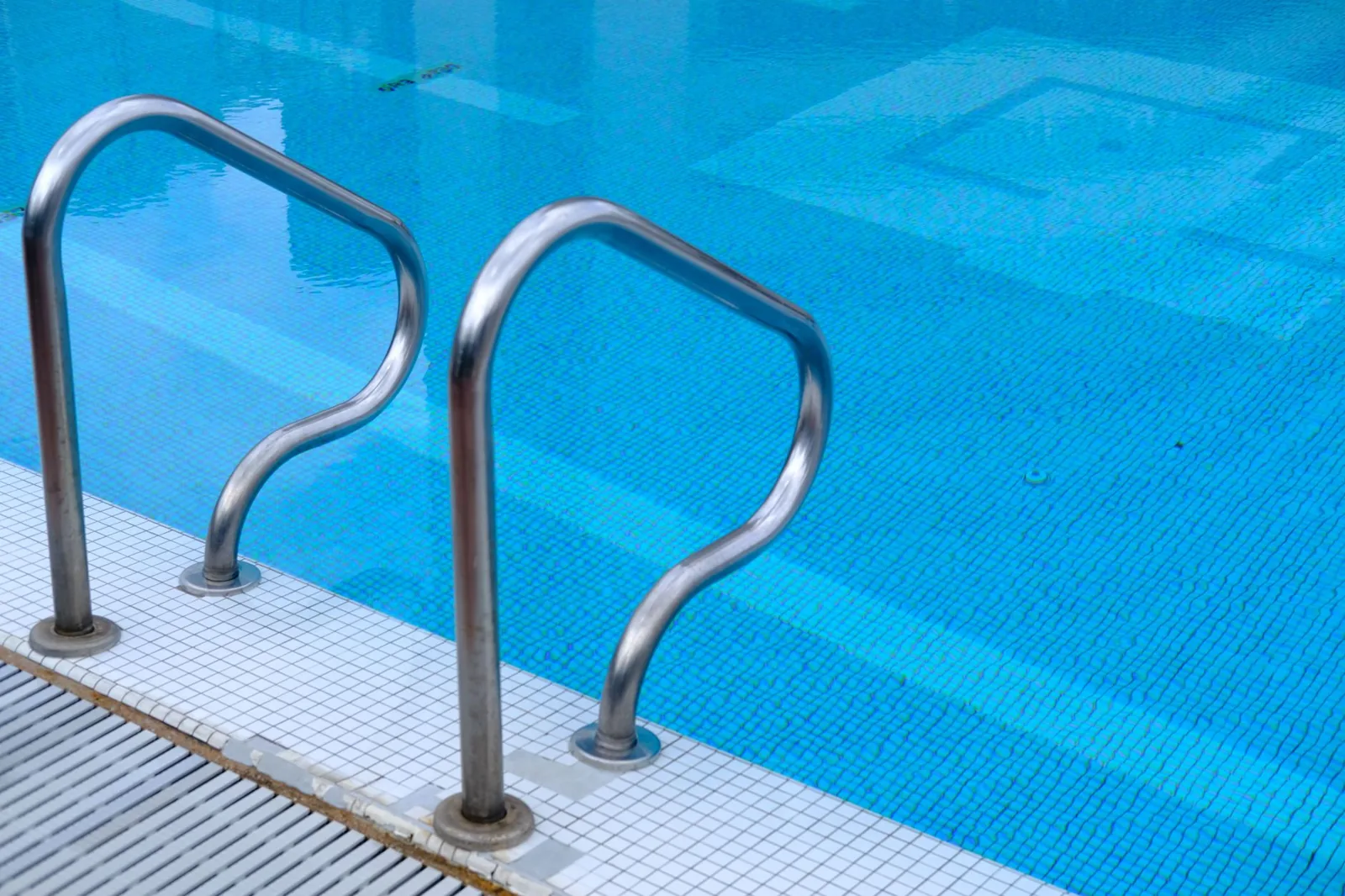
Photo by Towfiqu barbhuiya via Pexels
The Full Ten-Year Picture
Pulled together, the numbers look like this for a mid-size 20,000-gallon pool:
- Traditional chlorine: roughly $400 to $600 a year in chemicals, or $4,000 to $6,000 over ten years, with almost no equipment costs.
- Saltwater: $1,500 to $2,500 up front, then $25 to $75 a year in salt, $100 to $200 a year in electricity, and one or two $500 to $900 cell replacements over the decade. That is $3,500 to $6,500 all in.
The two systems are surprisingly close over ten years. Saltwater usually wins slightly on a larger, heavily used pool and can lose slightly on a small pool in a cool climate where chlorine use is already low. What you are really paying for with salt is time and feel, not a dramatic discount.
Comfort and Convenience Differences
Cost is not the whole story, and for many people the comfort gap is the deciding factor.
A properly dialed-in saltwater pool keeps chlorine at a low, steady level instead of the spikes you get after adding tablets or shock. That steadier chemistry means less of the “chlorine smell” (which is actually chloramines, the byproduct of chlorine reacting with sweat and lotions), softer-feeling water, and far less eye irritation and green-tinted hair for swimmers.
Convenience is the bigger win. Instead of hauling buckets of tablets and balancing chemistry twice a week, a salt pool owner checks the cell, tests the water once a week or so, and adjusts the generator’s output percentage from a control panel. Vacations are easier, because the system keeps producing chlorine while you are gone.
The flip side: salt systems hide problems. Because the chlorine level looks stable, a low-salt or scaled cell can mask algae trying to take hold, and you still have to test pH and stabilizer (cyanuric acid) yourself. A salt pool is lower-maintenance, not no-maintenance.
When Saltwater Is the Right Call
Go with a salt chlorine generator if you:
- Use the pool heavily and want steadier, gentler water.
- Travel often and cannot dose chlorine on schedule.
- Live in a hot climate where chlorine demand is high all season.
- Are building new, since adding salt at build time is cheaper than converting later.
Stick with traditional chlorine if you:
- Have a small or seasonal pool where chemical costs are already low.
- Own a pool with a lot of soft-metal fixtures, an older heater, or stone coping that salt could etch.
- Want the lowest possible upfront cost and do not mind the weekly routine.
- Are on a tight budget and would rather spend $300 a year than $2,000 today.
Neither system is objectively better. The right answer is whichever one you will actually maintain, because a neglected salt pool turns green just as fast as a neglected chlorine pool.
Frequently Asked Questions
Is a saltwater pool really cheaper than chlorine?
Over ten years they come out close. Saltwater costs more upfront ($1,500 to $2,500) but less per year in chemicals; traditional chlorine is cheap to start but runs $300 to $800 a year in chemicals. On a large, heavily used pool, saltwater usually saves money over the long run.
How much does it cost to convert a chlorine pool to salt?
A DIY conversion with a quality cell runs $800 to $1,800; a professional conversion typically costs $1,500 to $2,500 including the generator, installation, and initial salt. Expect to add 8 to 15 bags of salt at $6 to $12 each.
How long does a salt cell last?
Most salt cells last 3 to 7 years, or roughly 10,000 hours of operation, before the coating wears off and output drops. A replacement cell costs $500 to $900. Oversizing the cell and keeping water chemistry balanced stretches its life.
Do saltwater pools still need chlorine?
Yes. The generator makes its own chlorine from salt, but the water is still sanitized with chlorine. You do not buy chlorine, but you may still add a small amount of shock after heavy use or heavy rain.
Will salt damage my pool equipment?
Modern heaters and pumps handle salt fine, but soft metals, older heaters, and some natural stone coping can corrode or etch over time. A zinc anode and keeping pH and salt levels in range prevents most problems.
The Bottom Line
The saltwater pool cost vs chlorine question does not have a universal winner, and anyone who tells you otherwise is selling something. Saltwater costs more up front — usually $1,500 to $2,500 — and replaces that with gentler water, less weekly chemistry, and lower annual chemical bills. Traditional chlorine is cheap to start but demands more of your time and, at today’s tablet prices, more money every single season.
If you swim often, hate the smell and sting of a heavily chlorinated pool, or want to leave town without worrying about the water, a salt system is worth the upfront spend. If you have a small pool, older equipment, or a tight budget, a well-run chlorine pool remains a perfectly good, often cheaper choice.
Before you decide, the cost of the pool itself usually dwarfs either sanitizing method, so make sure you are comparing the whole project. See our guide on inground pool installation costs to budget the build, inground pool vs above ground pool cost if you are still deciding on the type, and fiberglass pool cost vs concrete once you are ready to pick a shell. For more on how chlorine generators work, This Old House and the U.S. Department of Energy both publish useful maintenance and efficiency guidance for pool equipment.