
Hot Tub Cost Installed: A Complete 2026 Pricing Guide
The average hot tub cost installed lands between $3,500 and $20,000, with most homeowners paying roughly $5,000 to $9,000 for a mid-range acrylic spa delivered, placed, wired, and filled. That spread is wide for a reason: the tub itself is only part of the bill, and the slab, electrical work, and any surprises on site day can quietly double the sticker price.
This guide breaks down what drives the final number, what you should expect to pay for each line item, and where installers tend to pad the quote. Use the figures here to budget realistically and to compare bids line by line rather than bottom line against bottom line.
What Drives the Total Hot Tub Cost Installed
The price tag on the showroom floor is rarely the price you pay. A $4,500 spa can easily become a $9,000 project once delivery, a pad, a 240-volt circuit, and a permit are in the mix. Understanding the variables below is the fastest way to keep your total under control.
Type and Construction of the Spa
Entry-level inflatable and portable spas cost $400 to $1,500 and often plug into a standard 120-volt outlet, which keeps installation to almost nothing. Rotomolded “plug-and-play” spas (think Freeflow or Lifesmart) run $2,500 to $5,000 and can usually share an existing outdoor outlet. Full-size acrylic spas from brands like Hot Spring, Caldera, Jacuzzi, Bullfrog, and Sundance start around $5,000 and climb past $20,000 for premium models with loungers, multiple pumps, and upgraded insulation.
Size and Seating
A compact two-to-three-person spa costs far less than a seven-seat party tub. Expect each additional seat to add roughly $500 to $1,500 to the unit price, and the larger footprint pushes up the cost of the pad, the delivery route, and sometimes the crane.
Site Preparation and Access
A flat, level concrete pad or reinforced deck is a prerequisite. If your yard is sloped, you will pay for excavation and leveling. If the delivery crew cannot wheel the spa to the site, you may need a crane at $300 to $1,000 or more. Narrow side yards, fences, and low overhead wires all add cost.
Electrical Work
This is the line item homeowners most often underestimate. A dedicated 240-volt, 50-amp GFCI circuit, run by a licensed electrician from the panel to the tub, typically costs $800 to $2,000. Long wire runs, panel upgrades, and trenching through a paved area push that higher.
Hot Tub Cost Installed by Type
Here is how the numbers shake out across the main spa categories, including a realistic installed total.
| Feature | Portable / Inflatable | Plug-and-Play | Acrylic (Standard) | Premium Acrylic |
|---|---|---|---|---|
| Unit price | $400–$1,500 | $2,500–$5,000 | $5,000–$10,000 | $10,000–$20,000+ |
| Site prep | Minimal | Small pad or deck | Concrete pad / deck | Concrete pad / deck |
| Electrical | 120V outlet | 120V (sometimes 240V) | 240V / 50A GFCI | 240V / 50A+ GFCI |
| Typical installed total | $500–$1,800 | $3,000–$6,000 | $6,500–$12,000 | $12,000–$25,000+ |
| Best for | Renters, tight budgets | First-time buyers | Most homeowners | High-end backyards |
The gap between a $2,500 plug-and-play spa and a $9,000 acrylic model is not vanity. Acrylic tubs are better insulated, heat faster, seat more people comfortably, and last noticeably longer, which matters if the tub will run year-round in a cold climate.
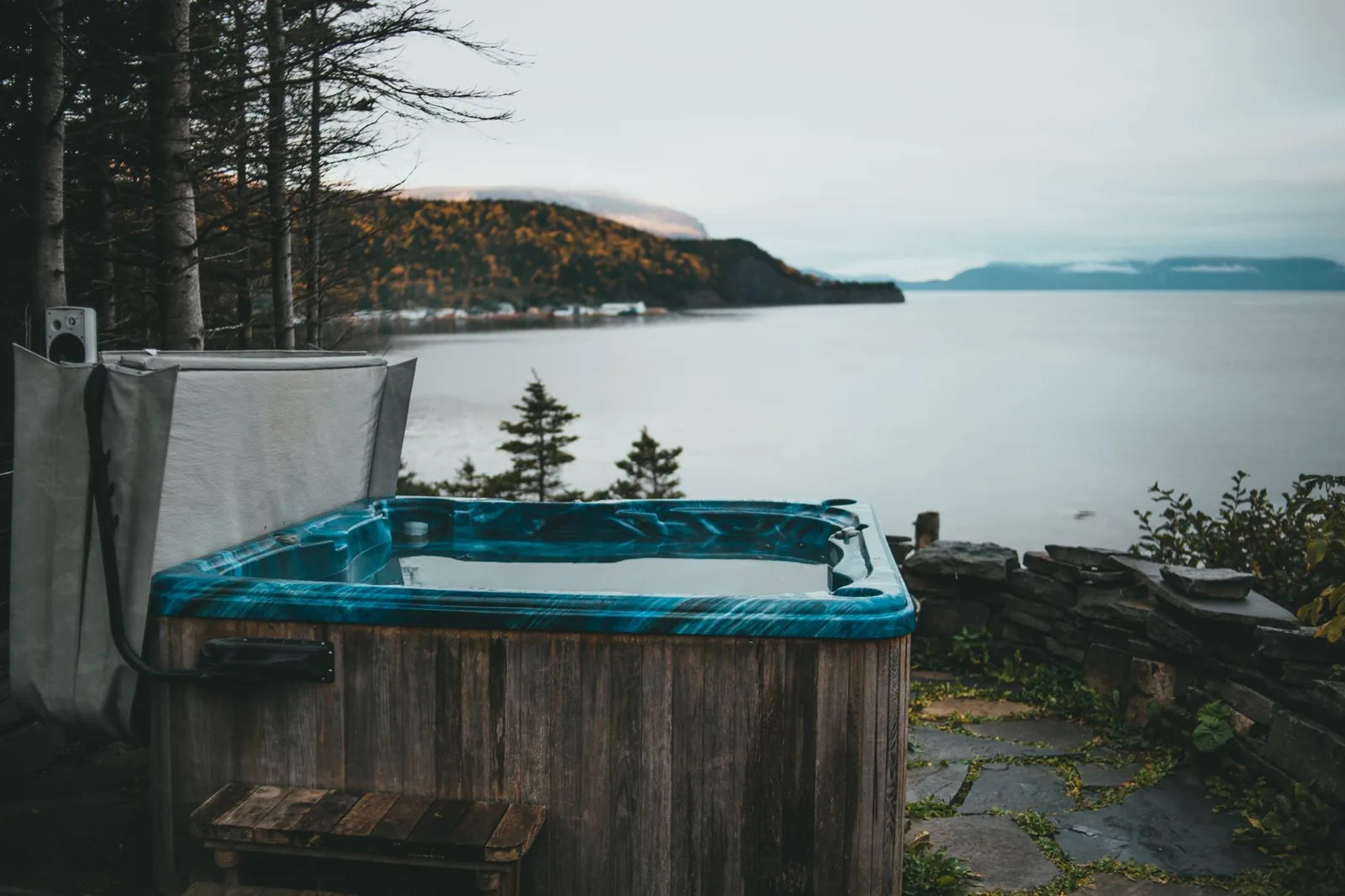
Photo by Erik Mclean via Pexels
Line-Item Breakdown of the Install
Knowing what each piece should cost stops you from overpaying on a single bundled quote. A transparent installer will itemize these; if a bid only gives you one number, ask for it broken out.
- Delivery and placement: $300–$700, often included when you buy from a local dealer.
- Concrete pad: $500–$1,500 for a 4-inch reinforced slab, depending on size and finish.
- Deck reinforcement: $800–$2,500 if you are placing the tub on an existing wood deck that needs additional supports.
- Electrical circuit: $800–$2,000 for a licensed 240V/50A GFCI run.
- Permits and inspection: $100–$400, required in most municipalities for the electrical work.
- Crane or special access: $300–$1,000 when the tub cannot be wheeled into place.
- Covers, steps, and chemicals: $300–$1,200 for a starter kit, though dealers often bundle these.
Above-Ground Spa or a Real Pool? Know the Difference
Before you commit to a spa, it is worth understanding where a hot tub sits relative to a full swimming pool on cost, because the two projects are frequently compared. The fully loaded cost of an above-ground pool runs in a similar range, while a built-in pool is a different order of magnitude entirely.
If you are weighing a spa against a pool, see our breakdown of the above ground pool cost installed and the inground pool installation cost to see how the total cost of ownership compares across seasons. For buyers torn between construction methods, our fiberglass pool cost vs concrete comparison covers the tradeoffs in detail.
Photo by Jonathan Borba via Pexels
The Installation Process, Step by Step
Understanding the sequence helps you spot a quote that skips steps or charges twice for the same work. A typical acrylic spa install runs like this:
- Site check. The dealer or contractor walks the delivery route, confirms access, and measures the pad location.
- Pad or deck prep. Concrete is poured and cured, or the deck is reinforced, usually a week or two before delivery.
- Electrical rough-in. The electrician runs the GFCI circuit and leaves a disconnect box near the tub location.
- Delivery and placement. The spa arrives on a dolly or crane and is set onto the pad.
- Final hookup. The electrician connects the tub to the disconnect, and the crew fills it, balances the water, and tests the jets.
- Inspection. The municipality signs off on the electrical work, which closes out the permit.
Most residential installs wrap in one to three days once the pad is cured, with the concrete cure time being the longest single wait in the process.
Ongoing Costs Most Buyers Forget
The installed price is only the entry fee. A hot tub costs money every month it runs, and those numbers should be part of your budget decision.
- Electricity: $20–$60 per month in a moderate climate, more in cold regions if the spa is poorly insulated or uncovered.
- Water and chemicals: $10–$30 per month for sanitizer, shock, and pH balancers.
- Maintenance and repairs: budget $100–$300 a year for filters, jets, and the occasional heater element or pump.
- Draining and refilling: plan on two to four times a year, depending on use.
A well-insulated, well-covered spa is dramatically cheaper to run than a bargain tub. The premium you pay upfront often pays for itself within a few years of lower electric bills.
How to Lower the Hot Tub Cost Installed
- Buy in the off-season. Dealers discount leftover inventory in late fall and winter, when demand drops.
- Bundle site work. If you are already pouring a patio or running electrical for another project, adding the spa at the same time cuts per-trade minimums.
- Choose plug-and-play where it fits. A 120-volt spa can save you $800–$2,000 in electrical work if your panel and outlet can handle it.
- Prepare the site yourself. Renting a compactor and leveling a gravel base can save the labor of full concrete prep, though a slab is still the most durable choice.
- Get at least three itemized quotes. Prices for identical tubs can vary by thousands between dealers in the same metro.
Frequently Asked Questions
How much does it cost to have a hot tub installed?
Expect a total hot tub cost installed of $3,500 to $20,000, with most homeowners paying $5,000 to $9,000. The unit itself, site preparation, electrical work, and delivery all factor into the final number.
Can a hot tub be installed on a deck?
Yes, but only if the deck is reinforced to hold the weight of the water. A filled spa plus occupants can exceed 5,000 pounds, so have a structural engineer or experienced contractor confirm the deck is up to the job before you place the tub.
Do I need a permit to install a hot tub?
In most areas, the electrical work requires a permit and an inspection, and some municipalities require a permit for the tub itself. Check with your local building department before scheduling delivery, since an unpermitted install can complicate a future home sale.
What size hot tub should I buy?
Plan for two to three people if it is mostly for couples, and six to seven if you entertain. A useful rule of thumb is to size the tub to your most common scenario rather than the largest party you can imagine hosting.
Is a plug-and-play hot tub worth it?
For first-time buyers on a budget, yes. Plug-and-play spas skip the 240-volt electrical work, which alone can save $800 to $2,000, though they heat slower and hold fewer people than a full-size acrylic spa.
For delivery, site prep, and electrical costs, This Old House covers hot tub installation.
The Bottom Line
The real hot tub cost installed is rarely the sticker price on the showroom tag. Budget for the pad, the electrical circuit, the permit, and delivery, and you will land within a few hundred dollars of the true number instead of a few thousand. A mid-range acrylic spa, properly sited and wired, will typically run you $6,500 to $12,000 all-in.
Get three itemized quotes, compare them line by line, and do not be afraid to ask what each fee covers. For help deciding between a spa and a larger water feature, our inground pool vs above ground pool cost guide lays out the numbers side by side.