Dry Well vs French Drain: Which Handles Yard Water Best?
Standing water in the yard is more than an eyesore. Left alone, it kills grass, invites mosquitoes, and — worst of all — pushes against foundation walls and the back of retaining walls until something cracks. The two most common fixes homeowners reach for are a dry well and a French drain, but they do not work the same way, and choosing wrong means spending thousands to move water somewhere it simply comes back.
In the dry well vs french drain decision, the short version is this: a French drain collects and redirects water away from a problem area, while a dry well captures and stores it underground so it can slowly soak into the surrounding soil. Both are legitimate tools, but they solve slightly different problems on slightly different sites. Here’s how to tell which one your yard actually needs.
What Is a Dry Well?
A dry well is a buried pit — usually a plastic or concrete tank with perforated sides, or a gravel-filled hole wrapped in landscape fabric — that receives water from a downspout, a sump pump, or a surface drain and lets it disperse into the ground over time. Instead of dumping roof runoff onto your lawn, the water goes into the dry well and percolates outward through the soil.
A typical residential dry well holds anywhere from 30 to 50 gallons of water in a precast plastic unit, while a hand-dug gravel pit version can hold considerably more depending on how big you dig it. The tank sits below the surface, covered by soil and turf, so once installed it is completely invisible. Downspouts connect to it with 4-inch solid PVC or corrugated pipe.
Dry wells work best in one specific situation: soil that drains well. If your yard is sandy or loamy and water soaks away within a few hours, a dry well can handle a surprising amount of roof runoff with no visible discharge point. If your yard is heavy clay, the pit fills and stays full, and you have effectively built an underground pond.
What Is a French Drain?
A French drain is a trench filled with gravel and a perforated pipe that runs along a slope, capturing water as it moves through the soil and carrying it to a discharge point — a street curb, a drainage ditch, a swale, or sometimes a dry well at the end of the line. The gravel acts as a filter, the pipe gathers the water, and gravity does the moving.
The pipe is laid with the holes facing down, a detail that surprises a lot of DIYers. Water rises up into the pipe from below rather than dripping in from above, which keeps sediment out and extends the life of the drain. Wrapping the gravel in landscape fabric keeps silt from clogging the voids over time.
A French drain is a redirect system. It assumes you have somewhere lower to send the water — a property slope, a storm drain, or the street. That makes it the better answer for a yard that sits flat or low with no natural soakaway capacity, and the standard fix for water pooling against a retaining wall or foundation. For a full cost breakdown, see our guide on french drain cost per foot.
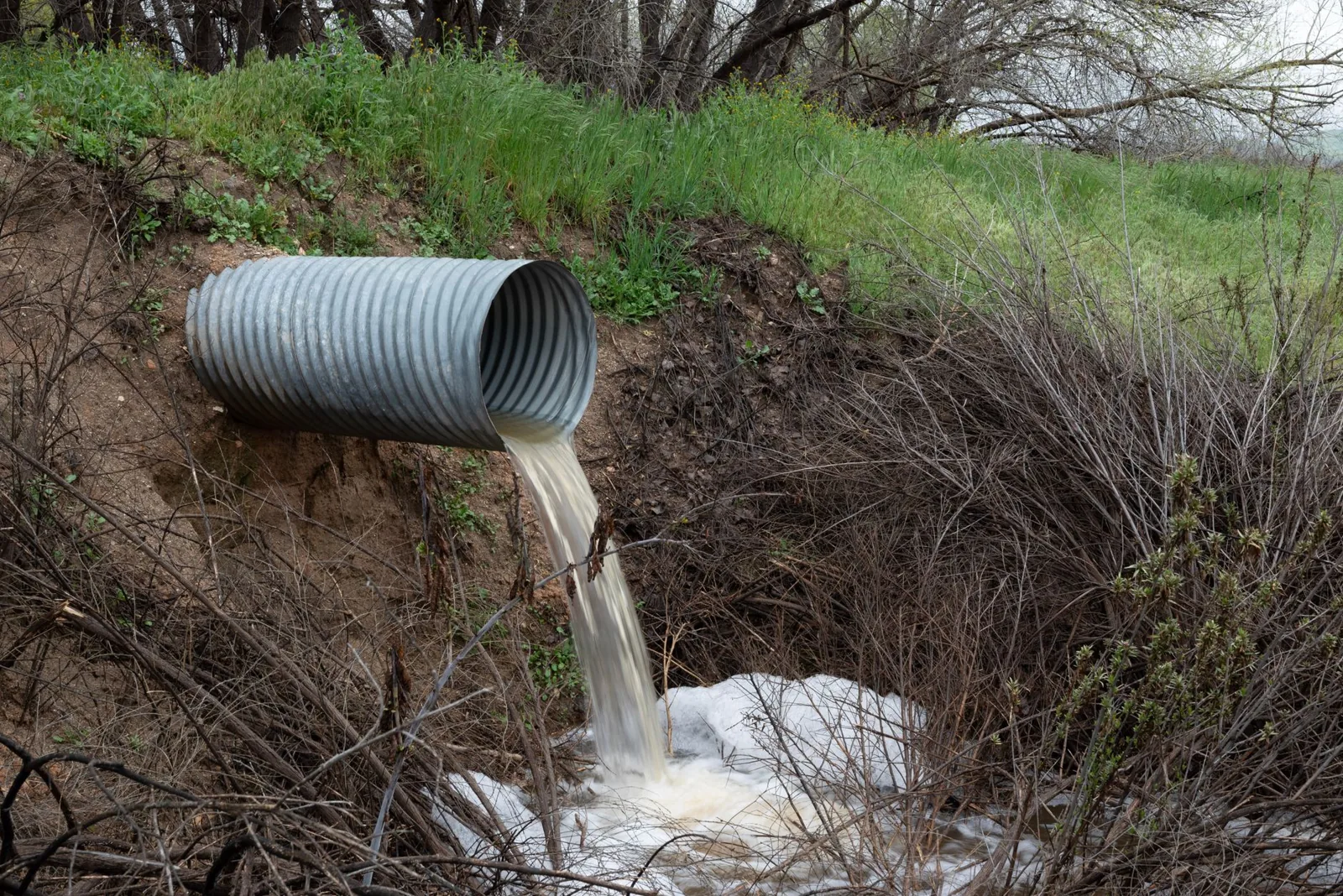
Photo by Joseph Russo via Pexels
Dry Well vs French Drain: How They Actually Differ
The easiest way to picture the difference is to ask one question: does the water need to leave, or can it stay and soak?
- A French drain moves water off the site. It collects groundwater and surface water along its length and gravity-flows it to a lower discharge point.
- A dry well stores water on the site. It holds runoff in an underground void and lets it percolate into the surrounding soil.
- A French drain treats a long, linear problem. It suits a wet strip along a fence, a soggy section of lawn, or water running down a slope toward the house.
- A dry well treats a concentrated point source. It suits a single downspout, a sump pump outlet, or one low corner of the yard.
Here’s the side-by-side in table form:
| Feature | Dry Well | French Drain |
|---|---|---|
| Primary job | Capture and slowly release water into soil | Collect and carry water to a discharge point |
| Best for | Downspouts, sump pumps, isolated low spots | Long wet areas, slopes, foundation/retaining wall runoff |
| Needs a discharge point? | No — relies on soil percolation | Yes — street, ditch, or swale downhill |
| Works in clay soil? | Poorly | Yes, if you have a downhill exit |
| Typical installed cost | $1,500–$3,500 | $5,000–$10,000 (full yard run) |
| Visibility after install | None (buried) | None (buried), except the discharge opening |
| Lifespan | 10–25 years before silt builds up | 20–30 years with proper fabric and flushing |
Neither system is strictly “better” — they solve different failure modes. Many well-designed yards use both: French drains gather water across the site and feed it to a dry well or pop-up emitter in a spot where it can safely soak away.
What Each One Costs
Dry wells are the cheaper single-point fix. A precast plastic dry well kit (tank plus lid) runs $150 to $400, and adding pipe, gravel, fabric, and an afternoon of digging puts a competent DIY install around $300 to $700 all-in. Hiring a pro, with excavation, a proper inlet connection, and cleanup, typically lands between $1,500 and $3,500 depending on depth, soil, and access.
French drains cost more because they cover more ground. Material alone — perforated pipe, clean gravel, fabric, and fittings — runs roughly $2 to $10 per linear foot, but excavation and labor push the installed price to $10 to $50 per linear foot. A 100-foot run around a problem area commonly lands in the $5,000 to $10,000 range. That number climbs fast if you need to cut concrete, work around utilities, or tie into a municipal drain. Your total budget is best estimated against the scope of your whole drainage problem — yard drainage cost per foot walks through the math.
A key hidden cost on both systems is disposal. Every cubic foot of soil you dig out has to go somewhere, and clay-heavy sites multiply the hauling bill. Get that line item in writing before you sign a contract.
Photo by Plato Terentev via Pexels
Which One Fits Your Yard?
Run a quick site test before you commit. Dig a hole about a foot deep and a foot wide where the water pools, fill it with water, and watch. If it drains within a few hours, your soil perks well enough for a dry well. If the water is still sitting the next morning, a dry well will just fill up, and you need a French drain with a real discharge point instead.
Other deciding factors:
- Clay soil + flat yard: French drain to the street or a storm drain is usually your only viable route. A dry well here is a mud pit.
- Sandy soil + roof runoff: A dry well at the downspout base handles most cases for a fraction of the price.
- Water against a retaining wall: This is a French drain’s classic job — relieve hydrostatic pressure before it pushes the wall over. Pairing the drain with proper backfill matters more than the wall material itself; see retaining wall cost per linear foot for the full picture on wall budgets.
- Single soggy corner, no downhill exit: A dry well may be your only option that doesn’t involve a pump. If the ground won’t perk, a sump pump into a dry well or storm sewer is the fallback.
- Basement or crawlspace sump pump discharge: Route it to a dry well so the pumped water doesn’t just circle back against the foundation.
Local rules matter too. Many municipalities cap how much runoff you’re allowed to redirect onto the street, and some now require on-site retention — which is a dry well by another name. Check with your town’s building department before digging, because both systems sit close enough to property lines and utilities that a permit or a locate call (dial 811 in the US) is genuinely required, not optional.
Installation: DIY or Hire a Pro?
A dry well is the more realistic DIY project. Digging a 3-to-4-foot-deep hole for a precast tank is real work, but it’s a contained hole, not a long trench, and the plumbing is a single inlet. Most confident DIYers can complete one in a weekend for a few hundred dollars in materials.
A French drain is harder to get right as a DIY job. The trench has to hold a consistent downward slope — the standard is about 1 inch of drop per 8 feet of run — and a pipe laid flat or with a belly will simply not drain. Getting the slope wrong is the most common reason a brand-new French drain fails within a year, so if your yard is flat and the fall is tight, a pro with a laser level and a mini-excavator earns their fee. Family Handyman has a solid step-by-step on French drain installation if you want to judge the skill level honestly before you start.
Whichever route you pick, both systems eventually clog if you skip maintenance. Flush the pipe with a hose every couple of years, keep downspout screens clear, and reseed the trench line once the soil settles so surface water doesn’t pool in the dip.
Frequently Asked Questions
Can a dry well and a French drain be used together?
Yes, and it’s a common professional setup. A French drain collects water across a long run and carries it to a dry well at the low end, where it can soak into percolating soil instead of being piped off the property. The combination works well on sites that slope but have no street or storm-drain access at the bottom.
How long do dry wells and French drains last?
A French drain with clean gravel, landscape fabric, and proper slope commonly lasts 20 to 30 years before it needs flushing or repair. A dry well tends to last 10 to 25 years, since silt and fine soil gradually fill the void and reduce its storage capacity. Both last dramatically longer when downspouts are screened and gutters are kept clear.
Which is better for clay soil?
A French drain with a downhill discharge point. Clay drains so slowly that a dry well will fill and stay full, giving the water nowhere to go. If your clay yard is also completely flat with no street or storm-drain access, a dry well paired with a sump pump is the usual last resort.
Do I need a permit for a dry well or French drain?
Often, yes. Regulations vary by town, but anything that redirects runoff, ties into a municipal system, or sits near a property line or utility easement frequently needs a permit and a utility locate. Call your local building department — and 811 before you dig — to avoid an expensive redo.
How much does a dry well cost compared to a French drain?
A dry well typically runs $1,500 to $3,500 installed, versus $5,000 to $10,000 for a full-yard French drain, though the two aren’t strictly comparable because a French drain covers far more linear footage. For a single downspout or low corner, a dry well is almost always the cheaper fix.
The Bottom Line
The dry well vs french drain choice comes down to what your water needs to do. If a single downspout or low corner is the culprit and your soil drains in a few hours, a dry well is the smaller, cheaper, fully buried fix. If water is running across a slope, pooling along a foundation, or pressing against a retaining wall, a French drain is the tool that actually moves it off the site.
Do the percolation test, check your local rules, and price both against the actual problem rather than the label. Match the system to the site and the water keeps moving where it should — instead of sitting where it shouldn’t.