Gunite Pool Cost vs Fiberglass: Which Inground Pool Fits Your Budget?
The gunite pool cost vs fiberglass decision shapes nearly every dollar you’ll spend on your backyard for the next two decades. Gunite pools, which are built by spraying a concrete-and-sand mixture over a rebar frame, typically run $50,000 to $100,000 or more depending on size and finishes. Fiberglass pools, delivered as a single prefabricated shell, usually land between $25,000 and $60,000 installed. That gap is real, but it only tells half the story.
What the sticker price hides is everything that comes after: how long you wait to swim, what you’ll spend on chemicals and resurfacing, and how well the pool holds its value when you sell the house. A cheap shell can become the expensive choice if it doesn’t match your soil, your climate, or how you actually use the pool.
This guide breaks down the numbers line by line so you can compare both options on your own terms.
How Much Does a Gunite Pool Cost?
A gunite (or shotcrete) pool is the most common type of inground pool in the United States, and it’s the option most people picture when they think “custom pool.” The flexibility comes at a price.
Typical Gunite Pool Price Ranges
- Basic 12′ x 24′ gunite pool: $45,000–$70,000
- Mid-size 16′ x 32′ with standard coping and tile: $60,000–$90,000
- Large or custom gunite pool (freeform, beach entry, spa): $90,000–$150,000+
- Average cost per square foot: $70–$100 for the shell, before decking and extras
Most full gunite installations fall between $50,000 and $100,000 once you include excavation, plumbing, electrical, decking, and basic landscaping. Add-ons drive the number up fast: a hot tub integrated into the shell adds $10,000–$20,000, a saltwater system adds $1,500–$3,000, and a heater runs $2,500–$5,000.
Gunite pools are priced as a custom build, so you’ll work with a contractor on a line-item quote rather than a fixed package.
How Much Does a Fiberglass Pool Cost?
Fiberglass pools arrive at your house on a flatbed truck as one molded shell, usually made by manufacturers like Latham, Leisure Pools, or Thursday Pools. Installation is faster and more predictable because there’s no curing and no framing on site.
Typical Fiberglass Pool Price Ranges
- Small fiberglass pool (10′ x 20’–12′ x 24′): $25,000–$40,000
- Mid-size shell (14′ x 28’–16′ x 35′): $40,000–$55,000
- Large or premium fiberglass model with spa: $55,000–$75,000
- Average cost per square foot: $50–$80 installed
The shell itself is a fixed product, which keeps pricing consistent. What varies is site work: excavation, backfill, crane placement, and the concrete collar that locks the shell in place. Expect the shell to be roughly half the total cost, with the other half going to installation and decking.
Photo by lhthoai via Pexels
Gunite Pool Cost vs Fiberglass: Side-by-Side Comparison
Here’s how the two stack up across the categories that actually cost you money over time.
| Feature | Gunite Pool | Fiberglass Pool |
|---|---|---|
| Installed cost (mid-size) | $60,000–$90,000 | $40,000–$55,000 |
| Build time | 8–16 weeks | 2–4 weeks |
| Shapes & sizes | Fully custom | Limited to factory molds |
| Surface feel | Rough, abrasive | Smooth, non-abrasive |
| Chemical use | High (porous surface) | Low (gel coat resists algae) |
| Resurfacing cycle | Every 10–15 years | 20–30+ years |
| Resurfacing cost | $10,000–$20,000 | Rarely needed |
| Resale appeal | Broad buyer familiarity | Growing, lower maintenance story |
The pattern is consistent: gunite costs more up front and more over time, but it buys you a shape no factory mold can replicate. Fiberglass costs less everywhere except the one thing you can’t change — its size and silhouette.
Build Time: Why Fiberglass Wins on Speed
Time is a hidden cost most homeowners forget to budget for. If you want a pool this summer, the two options are not in the same league.
A gunite pool typically takes 8 to 16 weeks from first dig to first swim. The concrete shell must be sprayed, then cured and kept wet for up to a month before plaster can be applied. Weather throws the schedule off easily — rain delays excavation, and cold snaps stretch curing time.
A fiberglass pool can be swimming-ready in 2 to 4 weeks. The shell is already built; crews excavate, set the shell with a crane, backfill, and finish the plumbing and decking. Weather matters less because the shell goes in as one piece.
If you’re building in spring and want a swim season out of it, fiberglass almost always wins. If you’re planning a year out and want a specific design, the wait matters less.
Ongoing Maintenance Costs
The real cost comparison isn’t what you pay on day one — it’s what you pay every month for the life of the pool.
Gunite Maintenance
Gunite’s plaster surface is porous and slightly rough. That means:
- More chlorine — the porous surface harbors algae, so you’ll use more sanitizer and often more muriatic acid to control pH.
- Brushing — you’ll brush the walls weekly to keep algae from taking hold in the texture.
- Resurfacing every 10–15 years — plaster wears out. Replastering a mid-size pool costs $10,000–$20,000, and you’ll do it at least once, probably twice, over 25 years.
Fiberglass Maintenance
The smooth gel-coat surface is non-porous, which changes the chemistry:
- Less chlorine — algae struggles to grip a slick, non-porous surface.
- Lower pH drift — the gel coat doesn’t leach into the water the way plaster does, so you’ll use fewer chemicals overall.
- No resurfacing — the gel coat typically lasts 20–30 years or more, and even then the fix is usually cosmetic.
Over a 25-year span, most industry estimates put fiberglass maintenance at a third to half of what a gunite pool costs to keep up. That gap can erase the sticker-price difference entirely.
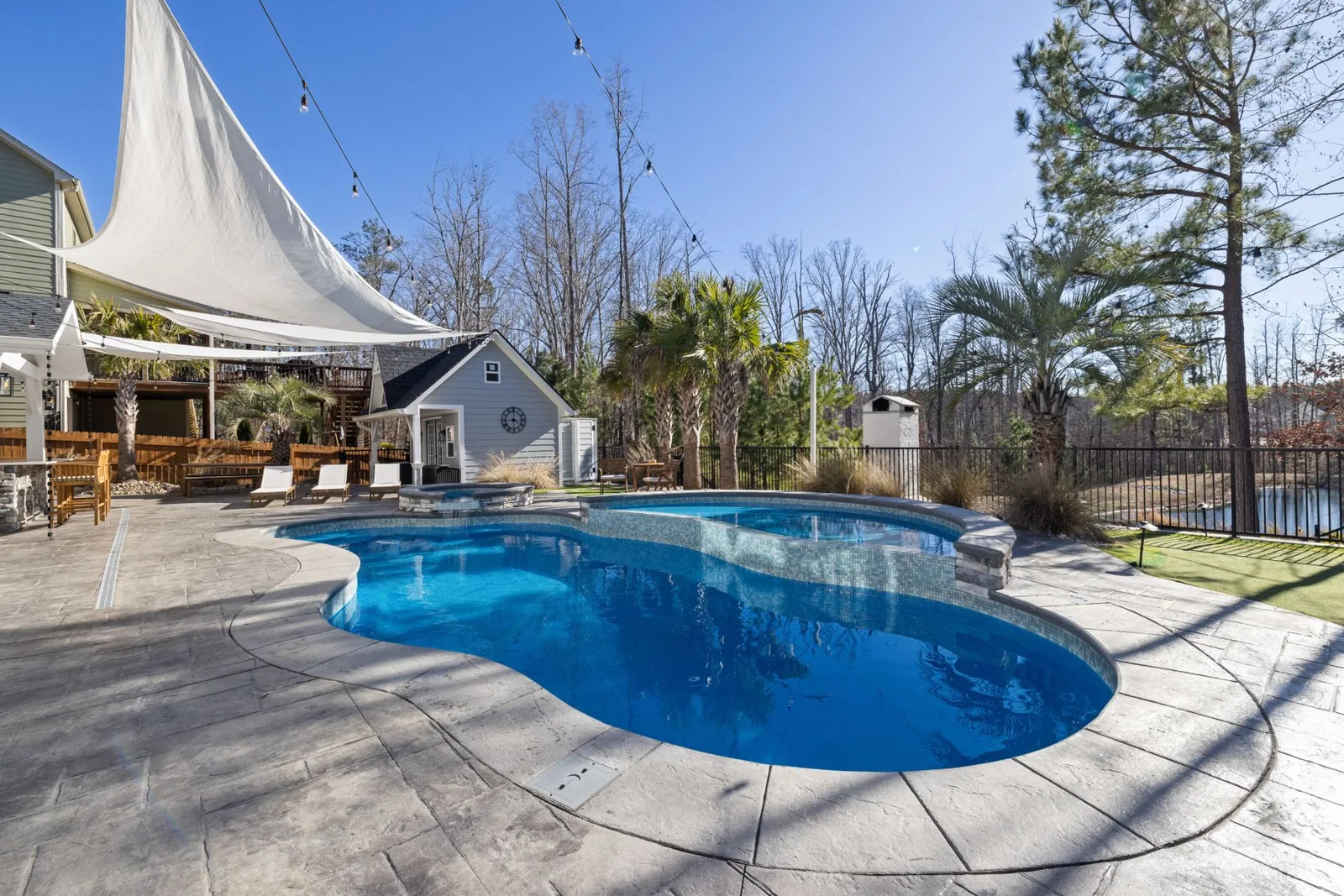
Photo by Curtis Adams via Pexels
Which Pool Holds Its Value Better?
Resale value is where the two options flip depending on your local market.
Gunite pools are what most buyers in warm-weather markets expect. In places like Florida, Texas, Arizona, and Southern California, a gunite pool is seen as standard, and its custom shape can boost curb appeal. Buyers there don’t blink at the maintenance because they grew up with it.
Fiberglass pools are catching up fast. Their “low maintenance” pitch appeals to first-time pool owners and buyers who’ve been burned by an aging plaster pool. In many markets a 10-year-old fiberglass pool that still looks new will out-show a 10-year-old gunite pool that needs a $15,000 replaster.
The honest answer: in the Sun Belt, gunite holds value through sheer familiarity. Everywhere else, fiberglass is increasingly the easier sale. Both beat an above-ground pool for adding real home value, but neither pool returns 100% of its cost at resale — expect to recoup roughly 50%–70% in most markets.
Which One Should You Choose?
There’s no universal winner, but the decision gets easy when you match the pool to your priorities.
Choose gunite if:
– You want a custom shape, tanning ledge, beach entry, or unusual depth profile.
– You live in a hot market where buyers expect gunite.
– You’re building a showpiece and plan to stay long enough to enjoy it.
– You have a challenging site where a crane can’t place a shell.
Choose fiberglass if:
– You want the lowest total cost over 10–20 years.
– You want the pool in the ground and swimmable within a month.
– You hate maintenance and want to spend less time brushing and dosing chemicals.
– You have a standard rectangular or gently-curved design in mind.
One more factor tips the scale for many people: comfort. Gunite plaster is rough on feet and swimsuits, while fiberglass’s smooth gel coat is noticeably gentler — a detail kids and anyone with sensitive skin will appreciate every single day.
Before you commit, it’s worth getting the full picture on what an inground pool installation involves in your area, and how a fiberglass pool compares to concrete if gunite’s maintenance is giving you second thoughts.
Frequently Asked Questions
Is a gunite pool more expensive than a fiberglass pool?
Yes, in almost every case. A mid-size gunite pool runs $60,000–$90,000 installed, while a comparable fiberglass pool runs $40,000–$55,000. Gunite also costs more to maintain over time due to resurfacing every 10–15 years.
How long does each type of pool last?
A well-maintained gunite shell can last 50 years or more, but its plaster surface needs resurfacing every 10–15 years at $10,000–$20,000 per job. A fiberglass shell and gel coat typically last 25–30 years or longer before any major surface work is needed.
Which pool is cheaper to maintain, gunite or fiberglass?
Fiberglass is cheaper to maintain. Its non-porous gel coat needs less chlorine, drifts less in pH, and rarely requires resurfacing. Most estimates put fiberglass maintenance at a third to half the long-term cost of gunite.
Can I get a fiberglass pool in a custom shape?
Only within the limits of the manufacturer’s molds. Fiberglass pools come in a set catalog of sizes and shapes — typically rectangular, kidney, and freeform styles up to about 16 feet wide. If you need a truly custom design, gunite is your option.
How much does a pool add to home value?
Most appraisers and real estate sources estimate a pool adds roughly 5%–8% to a home’s value in warm markets, which typically recoups 50%–70% of the installation cost. The type matters less than the condition — a new-looking fiberglass pool can out-show an aging gunite pool that needs resurfacing.
For a side-by-side comparison, Angi breaks down fiberglass vs. gunite pools.
The Bottom Line
The gunite pool cost vs fiberglass decision comes down to what you’re really buying. Gunite buys you a custom shape and a familiar resale story, at the cost of a longer build, more chemicals, and a replastering bill or two over the years. Fiberglass buys you a faster install and the lowest total cost of ownership, in exchange for a fixed design.
Run the numbers over 15 years, not just on the quote, and the two options often come out closer than the sticker suggests. If you want a one-of-a-kind pool and don’t mind the upkeep, gunite earns its price. If you’d rather spend your summers swimming than scrubbing, fiberglass is hard to beat.
Whichever direction you lean, compare at least three written quotes, check your soil conditions with a contractor before committing to a shell, and budget for the decking, fencing, and electrical work that every pool needs. Get the installation details right and you’ll be enjoying the water long after the cost conversation is forgotten.