Fire Pit Installation Cost: What Homeowners Really Pay in 2026
A fire pit turns an ordinary backyard into the spot everyone drifts toward after dark. But before you start dreaming about s’mores and slow evenings by the flames, it helps to know what you’ll actually spend. The fire pit installation cost for a typical residential project runs anywhere from $300 for a simple prefab kit you set up yourself to more than $5,000 for a custom gas-fed masonry feature with a professional contractor on the job.
Most homeowners land somewhere in the middle. The national average for a professionally installed fire pit sits around $850 to $1,500, while a DIY build using a steel or stone kit can come in under $700 all-in. Fuel type, materials, site prep, and whether you hire a licensed pro are the four levers that move the number the most.
This guide breaks down real pricing line by line so you can budget without the guesswork — whether you want a weekend wood-burning ring or a permanent gas fire feature that ties into your outdoor kitchen.
Average Fire Pit Installation Cost
The range is wide because a fire pit can be almost anything: a $49 steel bowl from the hardware store, a $600 paver kit, or a $4,000 custom concrete-and-stone build. Here is what you can expect to pay across the common tiers.
| Project type | Typical cost range | What you get |
|---|---|---|
| Prefab metal or stone kit (DIY) | $50 – $700 | Ready-made bowl, ring, or paver kit you assemble over a weekend |
| Wood-burning fire pit (pro install) | $600 – $1,500 | Excavation, gravel base, fire brick, and a finished stone or steel surround |
| Propane fire pit (pro install) | $1,000 – $2,500 | Factory-built burner, hidden propane tank hookup, and finished surround |
| Natural gas fire pit (pro install) | $1,500 – $5,000+ | Dedicated gas line run, burner, ignition, and masonry or stone veneer |
| Custom masonry or built-in feature | $3,000 – $10,000+ | Designed stone, concrete, or blockwork, often part of a larger hardscape |
Labor is the biggest variable in the professional column. Contractors typically charge $50 to $150 per hour, and most installs take a crew anywhere from half a day to two full days depending on access, drainage, and whether a gas line has to be run to the site.
Cost by Fuel Type
Fuel choice drives more of the fire pit installation cost than almost anything else, because wood, propane, and natural gas each come with different supply and safety requirements.
- Wood-burning is the cheapest to install. No gas line, no permits for gas work, and no plumbing inspection. You pay for the pit structure itself plus a safe, level, non-combustible base. Expect $300 to $1,500 for most residential setups.
- Propane costs more up front because of the burner kit and tank storage, but it needs no permanent utility work. A quality propane burner assembly runs $150 to $600, and you can hide a standard 20-pound tank or install a larger buried tank. Most propane pits total $1,000 to $2,500.
- Natural gas is the most expensive to install but the cheapest to run long term. You need a plumber or gas fitter to extend the line, which runs roughly $15 to $25 per linear foot — so a 40-foot run from the meter or house line alone adds $600 to $1,000 before the pit is even built. Total projects often land between $1,500 and $5,000.
If your backyard already has a natural gas stub-out from a grill or an outdoor fireplace, you may be able to tap into it and knock hundreds off the job.
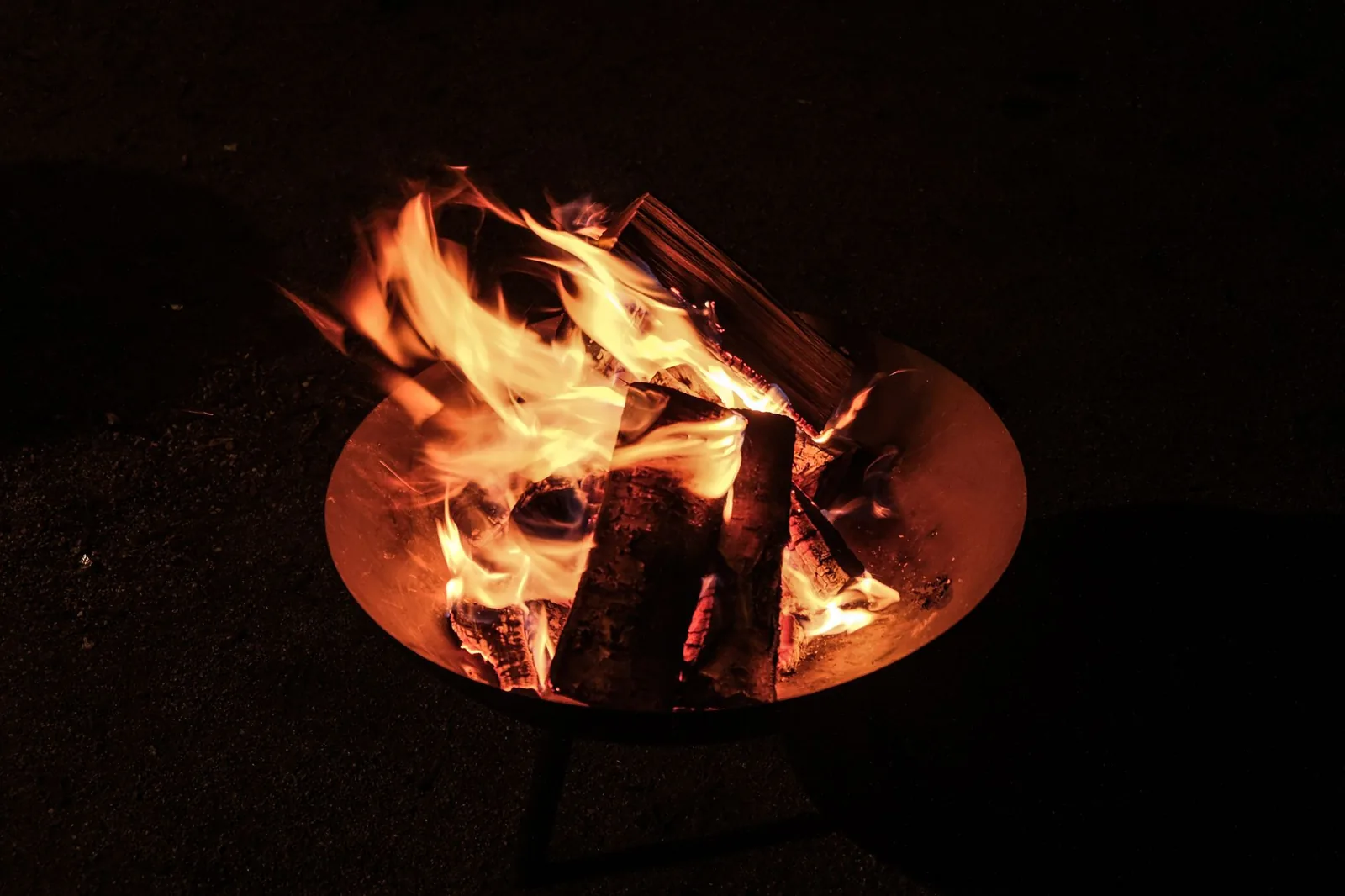
Photo by Mara Diezinger via Pexels
Cost by Material and Style
What the pit is made of sets both the price and how long it lasts. Cheaper materials can look great for a season or two, while masonry built on a proper footing will still be there in a decade.
- Steel and cast iron: $50 to $500. Inexpensive, portable, and easy to set up, but they rust and thin out with repeated heating and cooling.
- Stacked concrete block or pavers: $200 to $1,200. A popular DIY middle ground. The look is clean and modern, and the kit approach keeps labor low.
- Stone veneer over a concrete or steel core: $1,500 to $5,000. This is the high-end look most people picture when they say “built-in.” It requires a base and mortar work, which is why it usually calls for a pro.
- Custom concrete or poured-in-place designs: $3,000 to $10,000+. Fully bespoke shapes, benches, and integrated seating. Almost always part of a larger landscaping contract.
Style choices — round versus square, a raised sitting wall, a cooking grate, or a spark screen — add modestly to materials but mostly add time and labor.
DIY vs. Hiring a Professional
This is where homeowners either save $1,000 or spend it twice fixing a mistake. A DIY build is genuinely realistic for wood-burning and propane kits, and less so for anything gas-plumbed or custom-masonry.
DIY makes sense when: you want a freestanding metal or block kit, your ground is already fairly level, and you’re comfortable moving stone and digging a shallow base. A solid DIY paver pit with a gravel base and fire brick liner runs $250 to $700 in materials and a weekend of work.
Hire a pro when: the project needs a natural gas line, involves gas fittings or buried propane tanks, sits on a slope that needs retaining, or you want a built-in look that will add real value to the home. Gas work in particular is not a place to cut corners — a licensed plumber or gas fitter should handle any line extension, and many municipalities require a permit and inspection for exactly this kind of job.
The same logic applies if the fire pit is part of a larger build. A pit that sits next to a new pizza oven or a full outdoor cooking zone is better planned as one project with one contractor than as two weekend experiments.
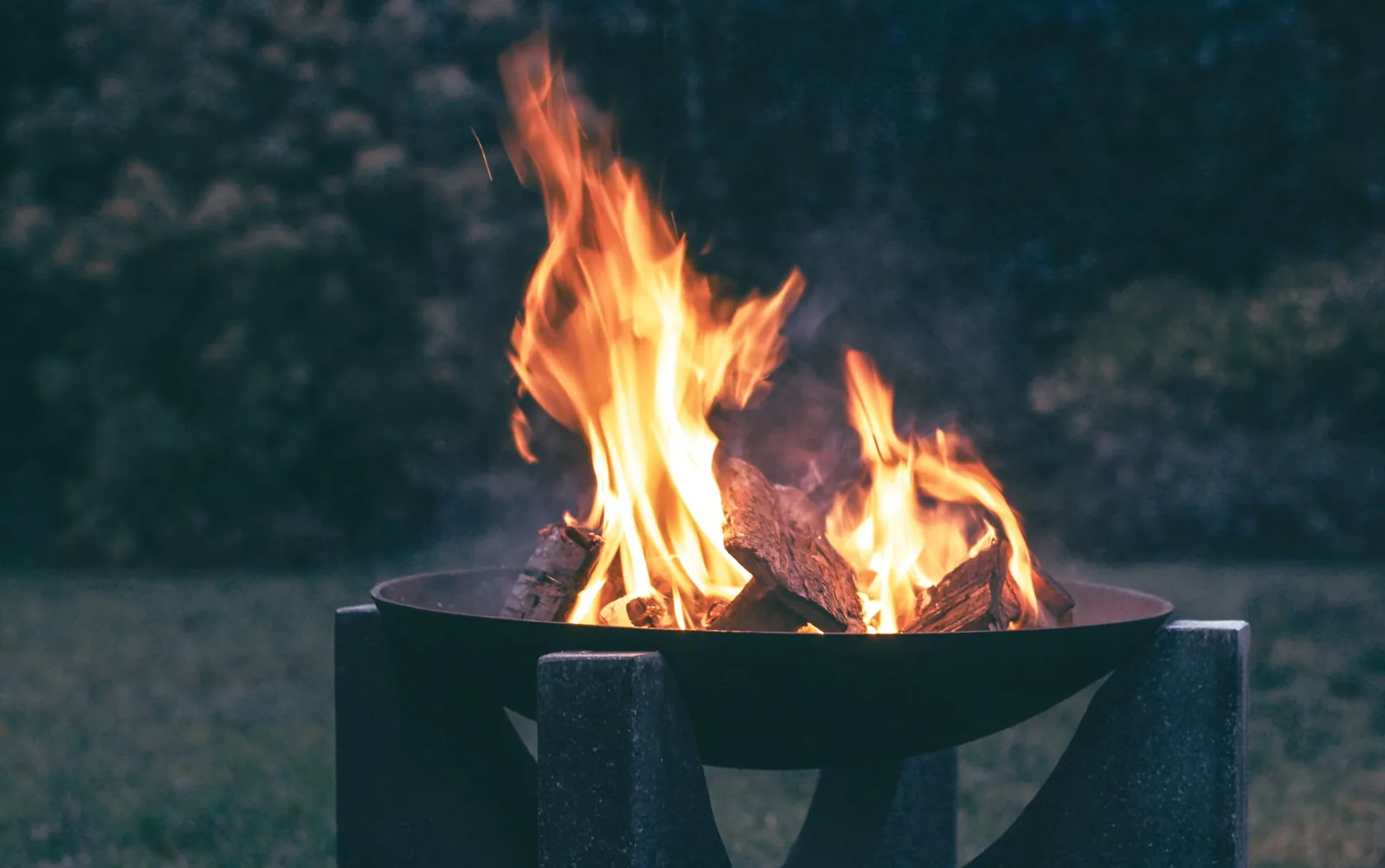
Photo by Tom Swinnen via Pexels
Hidden Costs, Permits, and Safety
The quote you get for the pit itself is rarely the whole bill. These are the line items that catch first-time buyers off guard.
- Site prep and base: A proper fire pit needs 4 to 6 inches of compacted gravel or a concrete footing so it doesn’t sink or crack. Budget $100 to $500 for excavation and base material if the ground isn’t already flat and stable.
- Gas line extension: Covered above, but worth repeating — $15 to $25 per linear foot, and longer runs can push the total past $1,500 on their own.
- Permits: Not every town requires one for a wood-burning pit, but gas-fired features usually do. Permit fees typically run $50 to $300. A local building or fire department can confirm clearance rules.
- Clearance and code: Most codes require a fire pit to sit 10 to 25 feet from structures, fences, and overhanging trees. If your only good spot is too close, you’ll pay to adjust the layout or move it.
- Finishing touches: Spark screens, a weather cover, a log grate, or a cooking grate add $30 to $200 apiece. Seating — built-in benches or quality Adirondacks — is easy to overlook and can add $500 to $2,000.
The good news is that a well-built fire pit in the right spot is a genuine selling feature. Real estate pros consistently rank outdoor fire features among the improvements buyers notice most, right up there with an upgraded outdoor cooking area.
How to Save on Fire Pit Installation
You don’t have to accept the top of the range. A few deliberate choices can drop the fire pit installation cost by a third or more without making the result look cheap.
- Buy the kit, do the base yourself. The pit structure is the easy part; paying someone to move gravel and level ground is where DIY labor pays off fastest.
- Skip the gas line if you won’t use it. Propane gives you the clean-burning, no-smoke experience at a fraction of the install cost, and a spare tank swap takes two minutes.
- Time it with other hardscaping. Contractors price small jobs higher per hour. If a paver patio or a retaining wall is on the list anyway, bundling the fire pit into that contract usually lowers the effective rate.
- Watch for clearance sales on kits. Big-box retailers discount fire pit kits hard at the end of summer and after Labor Day.
- Stick to a simple footprint. Every curve, seat wall, and veneer detail adds labor. A clean round pit on a gravel base looks sharp and costs half of a built-in with seating.
Frequently Asked Questions
How much does it cost to install a fire pit?
Most homeowners spend between $300 and $5,000, with the average professional installation landing around $850 to $1,500. Wood-burning and DIY kits sit at the low end; natural gas and custom masonry sit at the top.
Is it cheaper to build a fire pit or buy one?
Building from a paver or stone kit is usually cheaper than a turnkey install, but buying a finished prefab pit is often the cheapest option of all. A $150 to $400 prefab steel or cast-iron pit on a gravel base costs less than almost any built-in alternative.
Do I need a permit for a fire pit?
It depends on your location and fuel type. Gas-fired pits generally require a permit and inspection, while simple wood-burning pits often don’t. Check with your local building and fire department before you buy, since clearance rules vary by city.
How much does it cost to run a gas line to a fire pit?
Plan on $15 to $25 per linear foot for materials and labor, so a 40-foot run typically adds $600 to $1,000 to the project. Short stub-outs cost less, and long or obstructed runs cost more.
Does a fire pit add value to a home?
A well-built, well-placed fire pit is one of the most popular outdoor features among buyers and can help a home show better, even if the exact dollar return is hard to isolate. Built-in versions tied to an outdoor living space tend to add more perceived value than portable units.
For step-by-step build guidance, Bob Vila walks through how to build a fire pit.
The Bottom Line
The fire pit installation cost is as low or as high as you want to make it. For under $700, you can have a handsome wood-burning pit set up by the weekend. For $1,500 to $3,000, you can have a clean-burning propane or natural gas feature installed by professionals with the base done right. And for $5,000 or more, you can commission a custom masonry centerpiece that anchors the whole backyard.
The right number for you comes down to how you’ll actually use the pit, whether gas work is involved, and how long you plan to stay in the home. Get two or three quotes for anything with a gas line or masonry, keep clearances in mind from the start, and compare it honestly against the cost of the surrounding hardscape — including an outdoor kitchen if the fire pit is the first piece of a bigger plan.
Whatever you spend, a fire pit is one of the few backyard upgrades that pays you back in evenings well spent rather than just in resale numbers. Budget for the base and the safety basics first, and the good times follow.