Outdoor Kitchen Installation Cost: What You’ll Pay in 2025
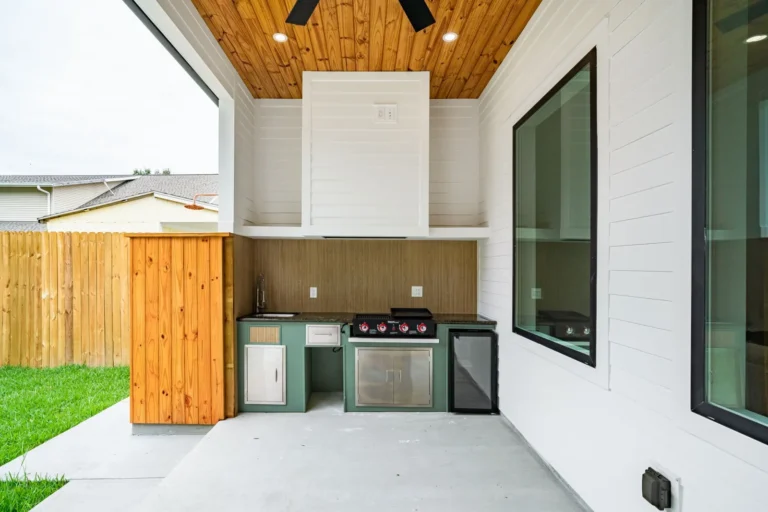
An outdoor kitchen turns a plain patio into the most-used room of your house from May through October. But before you start picking out granite counters and a built-in grill, the first number most homeowners want is the bottom line. Outdoor kitchen installation cost typically lands between $5,000 and $30,000, with most finished projects settling around $13,000 to $20,000. A modest prefab setup can come in under $8,000, while a fully custom kitchen with stone veneer, a pizza oven, and plumbing for a sink will easily cross $30,000.
The spread is wide because two neighbors with the same footprint can spend wildly different amounts. What separates them is less about the grill and more about the choices you make on materials, utility hookups, and who does the work. Here’s a realistic breakdown of what you’ll pay and where that money actually goes.
How Much Does Outdoor Kitchen Installation Cost?
Most professionals price an outdoor kitchen by linear foot, and that number changes a lot depending on what you’re asking for. A basic frame-and-finish build with a single grill runs roughly $150 to $250 per linear foot. A mid-range kitchen with a refrigerator, sink, and stone or tile cladding runs $300 to $550 per linear foot. High-end builds with premium stone, multiple appliances, and custom cabinetry can hit $700 to $1,000 or more per linear foot.
Here’s how a typical 10-foot L-shaped kitchen breaks down at each tier:
| Feature | Budget (Prefab) | Mid-Range | Custom / High-End |
|---|---|---|---|
| Base price (10 ft) | $5,000–$8,000 | $9,000–$15,000 | $20,000–$40,000 |
| Countertop | Laminate or tile | Granite or quartz | Soapstone or leathered granite |
| Appliances | Grill only | Grill + fridge + side burner | Grill + fridge + sink + pizza oven |
| Finish | Painted frame or stucco | Stone or tile veneer | Natural stone + custom cabinetry |
| Utility hookups | Electric only | Gas + electric | Gas + water + drain + electric |
The single biggest line item is almost always the appliances, not the structure itself. A good built-in gas grill runs $1,500 to $5,000 on its own, and adding a refrigerator, side burner, and ventilation quickly doubles the appliance budget.
What Factors Drive the Price?
If you want to understand outdoor kitchen installation cost, you have to know which levers actually move it. These four do the heavy lifting.
Size and linear footage
Every extra foot adds framing, counter surface, and finish material. A compact 6-foot grilling station might cost $4,000 to $7,000 all-in, while an 18-foot full kitchen with a bar seating area can push past $35,000. Size is the multiplier everything else hangs on.
Materials and finishes
The frame is usually concrete block, steel studs, or a weather-resistant wood like cedar. Cladding is where the visual money goes: stucco is the cheapest, natural stone veneer is the most expensive, and tile or manufactured stone sits in between. Countertops follow the same ladder, from sealed concrete and tile up to granite, quartzite, and soapstone.
Appliances and fixtures
A drop-in grill is the entry point. Add a side burner, a pellet smoker, an outdoor-rated refrigerator, a sink, an ice maker, or a pizza oven, and each one tacks on $500 to $5,000 plus the cost of running utilities to it.
Utility hookups
Running a gas line 25 feet from the house can cost $300 to $1,200. Adding a water line and drain for a sink is $500 to $2,000. Electrical work for outlets, lighting, and a refrigerator runs $400 to $1,500. Each new utility you add is both a material cost and a separate permit and inspection.

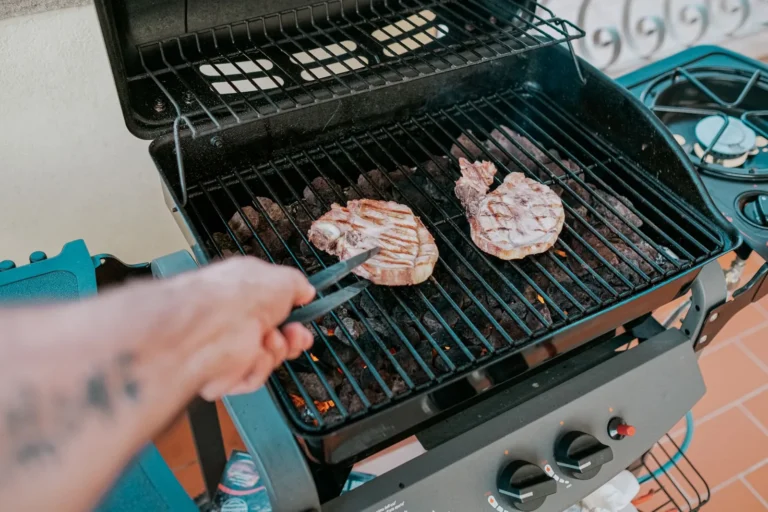
Photo by Marcelo Verfe via Pexels
Labor Costs and What Installers Charge
Labor typically accounts for 30% to 50% of the total project. A general contractor or a company that specializes in outdoor kitchens will usually quote the whole job as one number, but here’s what’s inside it.
- Design and planning: $500 to $2,000, more if you want 3D renderings or engineered drawings for a covered structure.
- Site prep and foundation: $1,000 to $3,500 for leveling, a concrete pad, and drainage.
- Framing and finish work: $2,000 to $8,000 depending on materials and complexity.
- Appliance installation: $500 to $1,500 for a basic grill, more when multiple appliances and ventilation are involved.
- Plumbing and gas: $700 to $3,000 combined, driven by how far the lines have to travel.
- Electrical: $400 to $1,500 for a dedicated circuit, outlets, and lighting.
Specialty trades cost more per hour than a handyman, but they’re worth it for anything involving gas or water. A licensed plumber charges $45 to $200 an hour, and an electrician $50 to $100 an hour. Skimping on the licensed trades is where outdoor kitchens go wrong, because a bad gas connection or an unpermitted drain is expensive to fix after the fact.
Outdoor Kitchen Installation Cost by Type
The kind of kitchen you build changes the total more than almost anything else, because it dictates how much of the work is off-the-shelf versus custom.
Prefab or modular kitchens
These ship as assembled islands or grill carts, and installation is mostly about placing and leveling them. Expect $3,000 to $12,000 installed. They’re fast, but you’re limited to the manufacturer’s sizes, finishes, and appliance options.
Standard built-in kitchens
A framed and finished island with a built-in grill and one or two extra appliances is the most common choice. Installed cost runs $10,000 to $25,000. This is the sweet spot for most homeowners because you get a custom look without a fully custom price.
Full custom kitchens
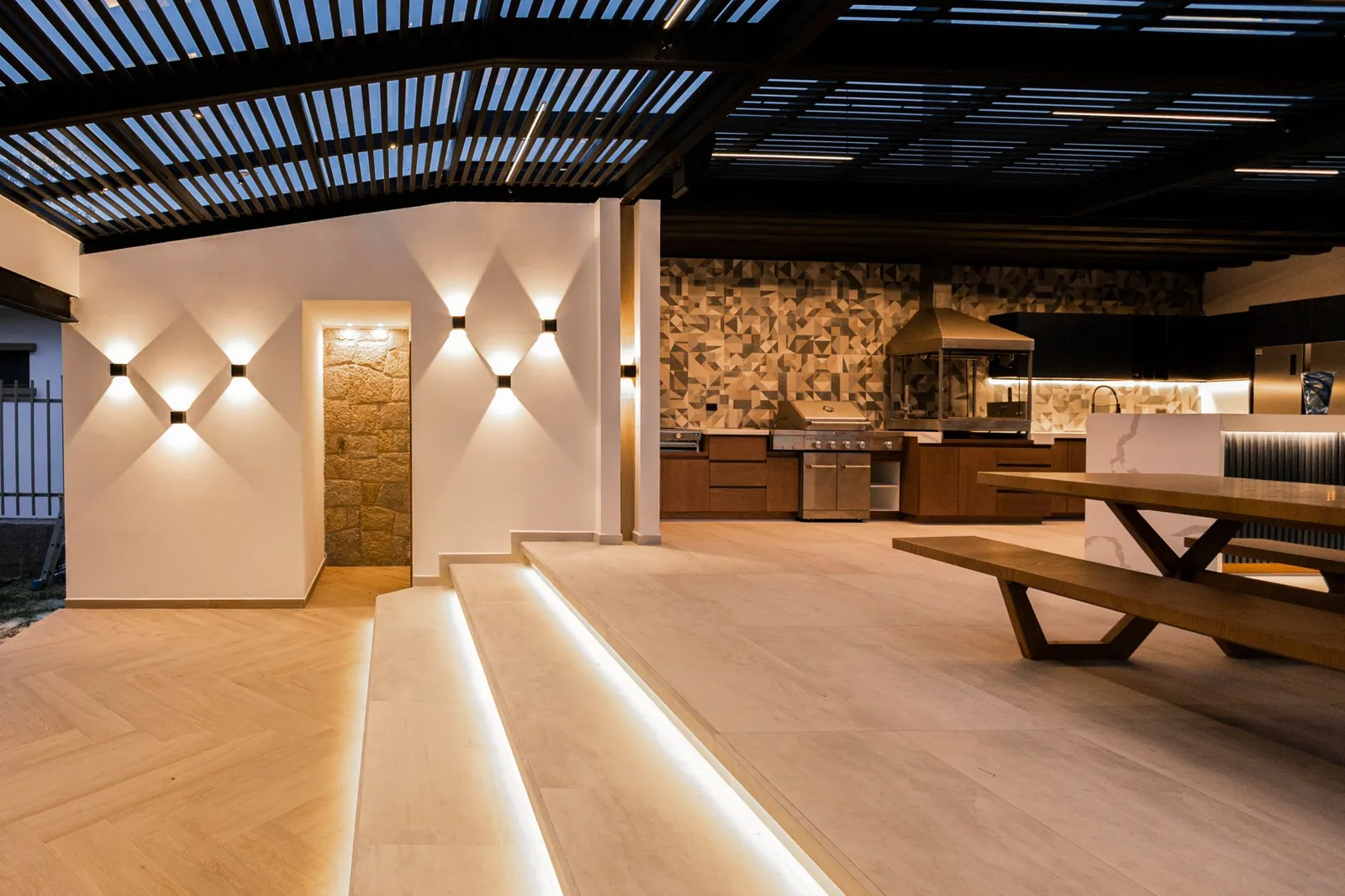
A complete outdoor kitchen with multiple work zones, a bar, a sink, a pizza oven or smoker, and premium stone cladding runs $25,000 to $50,000 or more. If you add a pergola, roof, or pavilion over the kitchen, budget another $5,000 to $30,000 depending on the structure.
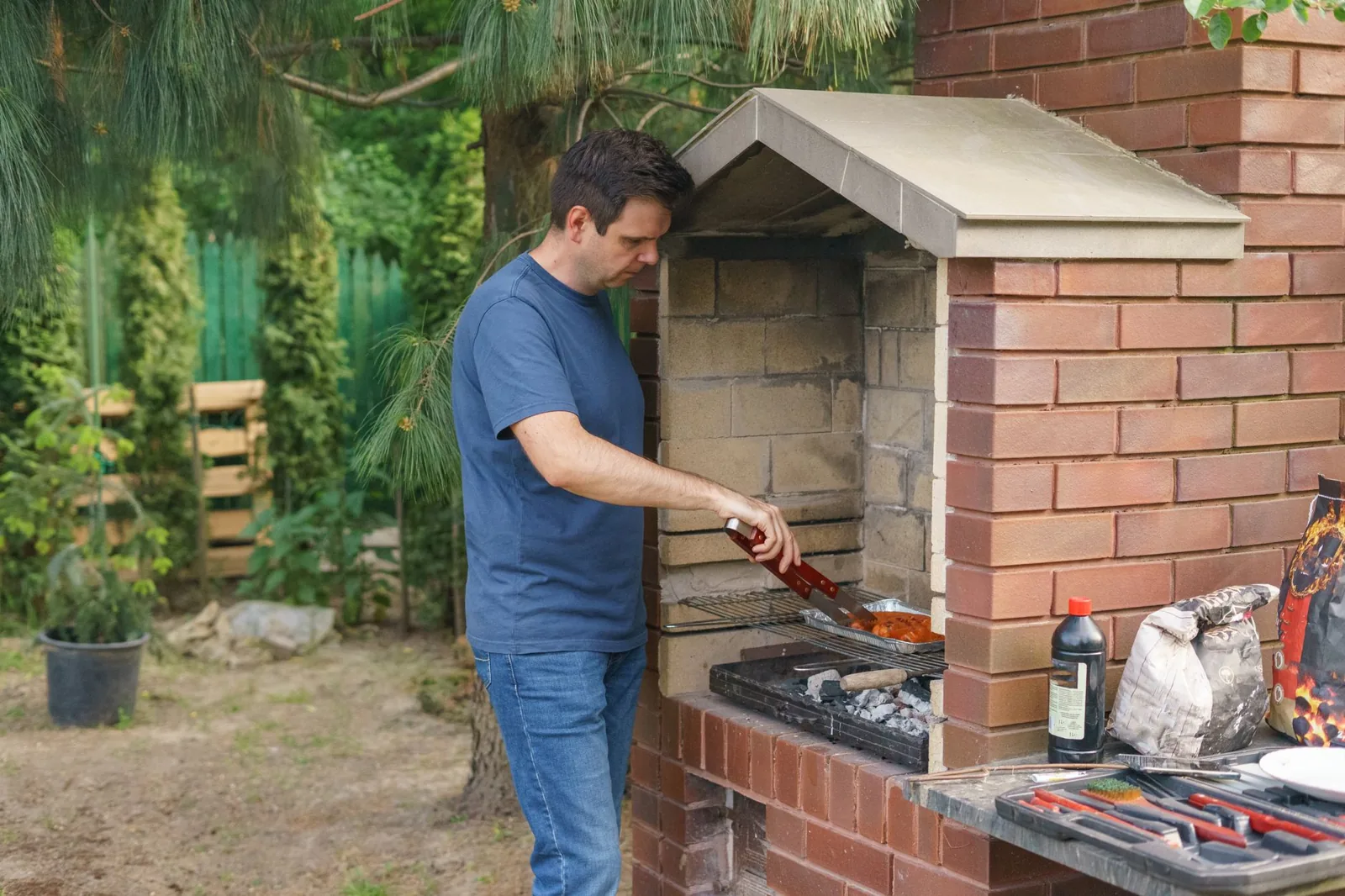
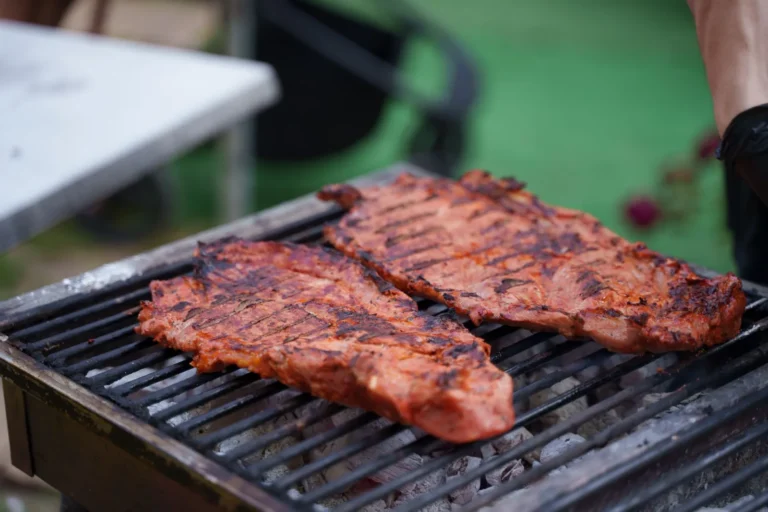
Photo by Aleksander Dumala via Pexels
DIY vs. Hiring a Pro
Building an outdoor kitchen yourself can cut the labor portion of the bill by 30% to 50%. A competent DIYer can assemble a modular kitchen or frame a simple grill island for $3,000 to $10,000 in materials. That’s a real saving over the $10,000 to $15,000 a pro might charge for the same footprint.
But there are hard limits to what most homeowners should attempt. Anything touching natural gas or a propane line is a job for a licensed professional, full stop. Plumbing a sink and drain is another one, because an outdoor drain that isn’t properly vented or winterized will freeze, crack, and leak. And if your project needs a permit — which most permanent installations do — some jurisdictions require the work to be done or at least signed off by a licensed contractor.
A good middle path is to do the labor-intensive but low-risk work yourself — demo, site prep, framing, and finish — and hire pros only for gas, plumbing, and electrical. Many contractors will work with you on that split, and it keeps the project both safe and affordable.
How to Save Money on Installation
Outdoor kitchens get expensive through scope creep, not through any single line item. Here’s where to pull back without regretting it later.
- Start with a grill and a counter, then expand later. Buy an island frame with room to add a fridge or side burner when the budget allows.
- Use manufactured stone instead of natural stone. It looks nearly identical at 40% to 60% less.
- Choose a modular kitchen if your yard and layout can accommodate one, and reserve custom work for the finishes that show.
- Keep the kitchen close to the house. Every foot of gas line, water line, and conduit adds material and labor cost.
- Do your own demo and site prep. Clearing and leveling are weekend jobs that don’t require a license.
- Buy appliances during end-of-season sales. Late summer and fall are when grill and outdoor appliance prices drop the most.
For a closer look at how the math works on the structure itself, see our guides on outdoor kitchen cost per linear foot and how much it costs to build an outdoor kitchen. If a pizza oven is part of the plan, how much it costs to install a pizza oven breaks down that line item separately.
Frequently Asked Questions
Is an outdoor kitchen a good return on investment?
Most real estate professionals put the return between 50% and 100% of what you spend, with kitchens in warm climates recovering more because buyers expect them. It’s less a pure financial play than a quality-of-life upgrade that also makes your home easier to sell.
How long does it take to install an outdoor kitchen?
A modular kitchen can be set up in a day or two. A standard built-in kitchen takes two to four weeks, and a full custom build with utilities and a covered structure can run six to twelve weeks once permits are approved.
Do I need a permit for an outdoor kitchen?
Usually, yes. Permanent structures, gas lines, plumbing, and electrical work all typically require permits. Check with your local building department early, because unpermitted work can complicate a future home sale and may need to be torn out to be inspected.
Can I install an outdoor kitchen on an existing patio?
You can, as long as the patio can carry the weight. Concrete patios are usually fine; paver patios may need a reinforced section under the island. A pro should confirm the pad is level and properly sloped for drainage before the build starts.
What’s the cheapest type of outdoor kitchen?
A prefab or grill-cart setup is the cheapest path, usually $3,000 to $8,000 installed. You give up built-in appliances and custom sizing, but it’s the fastest and lowest-commitment way to get a working outdoor kitchen.
The Bottom Line
Outdoor kitchen installation cost isn’t one number — it’s a range you control with every choice you make. Plan on $5,000 to $8,000 for a basic prefab setup, $10,000 to $25,000 for a standard built-in kitchen, and $30,000 or more for a full custom build with premium finishes and every appliance. The structure is the cheap part; the appliances and the utility lines are where budgets usually swell.
Set your appliance list and your utility needs first, then build the frame and finishes around what’s left. Hire licensed pros for gas, plumbing, and electrical, do the low-risk labor yourself if you’re able, and leave room in the budget for the extras you’ll inevitably want once you see the space come together. For guidance on the surrounding project, The Home Depot and This Old House both publish reliable outdoor kitchen cost guides worth a read before you sign anything.