Swim Spa vs Pool: Cost, Space, and Value Compared
The swim spa vs pool debate comes down to one practical question: what do you actually want to do in the water? If you want a place to swim laps, soak, and recover year-round in a fraction of the footprint, a swim spa is hard to beat. If you want a full-size body of water for the family, parties, and real estate appeal, a traditional pool still wins. The right answer depends on your space, your climate, your budget, and how often you’ll really use it.
Costs are the first filter for most homeowners. An entry-level swim spa runs roughly $15,000 to $35,000 installed, while a standard in-ground pool typically starts around $35,000 and climbs past $70,000 for gunite. That gap narrows once you factor in a swim spa’s energy bill, but the monthly numbers are rarely as dramatic as the sticker price suggests.
Here’s a direct comparison of the two so you can decide with real figures instead of brochure talk.
What Is a Swim Spa?
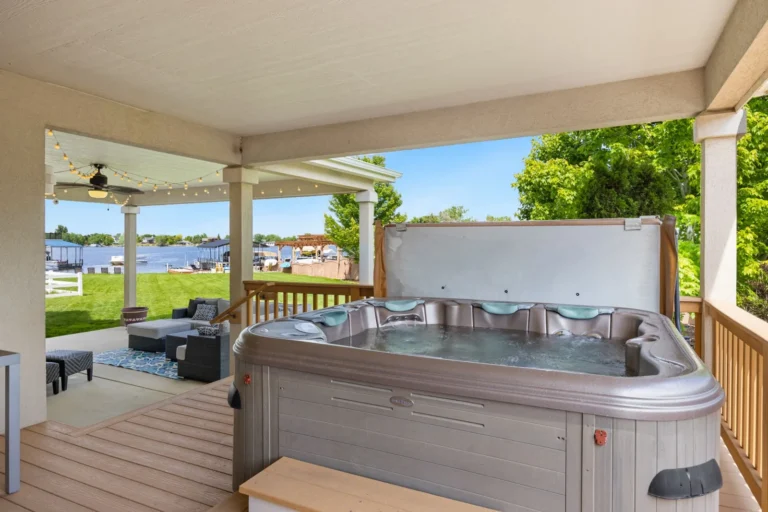
A swim spa is a large self-contained acrylic shell — think a hot tub crossed with an endless pool. A jet system or propeller-style current pushes water against you so you can swim in place without ever reaching a wall. Most models run 14 to 20 feet long, 7 to 8 feet wide, and 4 to 5 feet deep, holding 1,200 to 2,500 gallons.
A traditional pool, by comparison, is a permanent excavation holding 15,000 to 30,000 gallons, usually 28 to 40 feet long and 8 to 9 feet deep at the deep end. The two products serve different definitions of “swimming.”
Swim Spa Advantages
- Fits in a side yard, small backyard, or even a garage conversion
- Heats to 80–100°F, so it works as a pool, hot tub, and hydrotherapy tub
- Swimmable current lets you do real laps in a 15-foot shell
- Installs in days, not weeks, and can be relocated
Swim Spa Drawbacks
- No room for diving, cannonballs, or multiple swimmers at once
- Shallower than a pool (4–5 feet vs 8+ feet), limiting play
- Strong current can overwhelm small children if not supervised closely
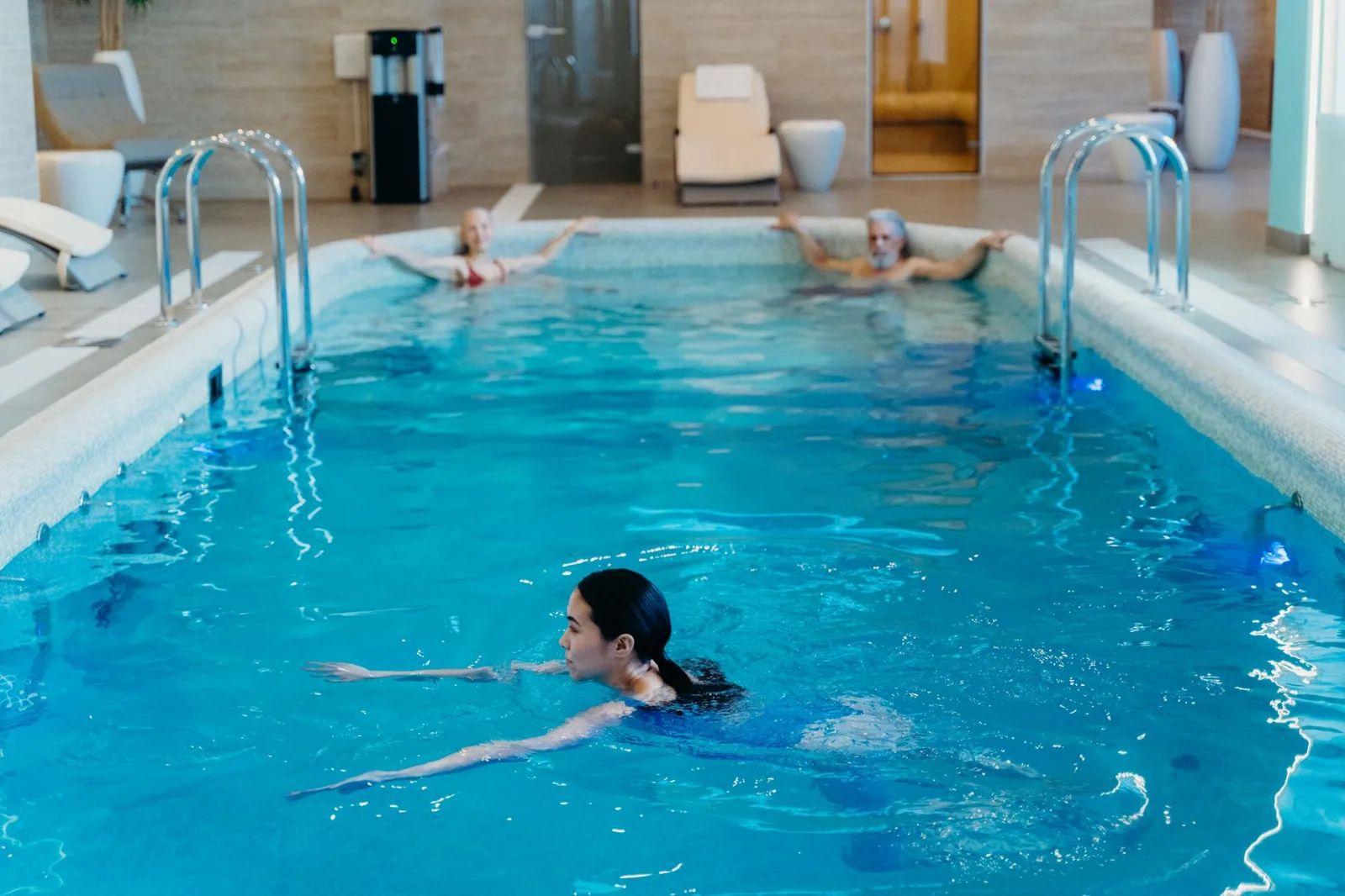
Photo by cottonbro studio via Pexels
Swim Spa vs Pool: Upfront Costs Compared
The purchase price is where the swim spa vs pool gap is widest. Here are realistic 2024 ranges for a complete, turnkey installation, including delivery, site prep, electrical, and basic accessories.
| Feature | Swim Spa | In-Ground Pool |
|---|---|---|
| Entry-level cost | $15,000–$25,000 | $35,000–$50,000 (fiberglass or vinyl) |
| Mid-range cost | $25,000–$40,000 | $50,000–$80,000 (gunite/concrete) |
| High-end cost | $40,000–$60,000+ | $80,000–$150,000+ |
| Installation time | 2–5 days | 4–12 weeks |
| Typical water volume | 1,200–2,500 gallons | 15,000–30,000 gallons |
| Relocatable | Yes | No |
A swim spa sits on a reinforced pad or deck and plugs into a dedicated circuit. A pool requires excavation, plumbing, a filter system, and often fencing, decking, and permits. Those hidden costs are why a “cheap” pool quote often doubles by the time the yard is restored.
For context on what a full in-ground build really costs, our guide to inground pool installation cost breaks down the line items — excavation, shell, finish, and equipment — that swim spa buyers never pay for.
Space, Site Prep, and Installation
Footprint is the single biggest practical difference. A 15-foot swim spa needs a level pad of roughly 8 by 16 feet, plus clearance for the cover and access panels. That’s about 128 square feet of yard — small enough to tuck along a fence line or against a house.
An in-ground pool with a basic deck needs 400 to 800 square feet, and most municipalities require a safety fence and a set-back from property lines. If your lot is under a quarter acre, a full pool may simply not fit once you account for the fence and equipment pad.
What Each One Needs to Install
Swim spa: a 4- to 6-inch reinforced concrete pad or structurally rated deck, a 50- to 60-amp 240V circuit run by an electrician, and a route wide enough for a crane or heavy trolley if your yard is hard to access.
Pool: excavation, steel or fiberglass shell placement, plumbing trenches, a filter/pump/heater pad, concrete or paver decking, and a final inspection. Count on 4 to 12 weeks and a torn-up yard for most of the season.
If you’re weighing a pool against a swim spa partly because of site constraints, the trade-offs are similar to the ones in our fiberglass pool cost vs concrete comparison, where excavation and access often decide what’s even feasible.

Photo by Andrea Piacquadio via Pexels
Monthly Operating Costs: Energy, Water, and Chemicals
Operating costs are where swim spas earn their keep — and where the sticker-price advantage softens a little. Because a swim spa holds far less water, heating and chemical treatment cost less in absolute terms. The catch is that most owners keep the water hot (95–100°F) for months at a time, and heating even 2,000 gallons year-round still draws meaningful power.
Estimated Monthly Costs
- Swim spa electricity: $50–$150/month depending on climate, cover quality, and set temperature
- Pool electricity (pump + optional heater): $30–$80/month without heat; $150–$400/month if you heat the water
- Swim spa chemicals: $15–$30/month
- Pool chemicals: $20–$60/month
- Swim spa water use: a few thousand gallons per year (refills)
- Pool water use: 15,000–30,000 gallons per fill, plus evaporation and backwash losses
The Energy Saver guidance from the U.S. Department of Energy recommends a well-fitting insulated cover and a variable-speed pump for any heated outdoor water feature — both have a bigger payoff on a swim spa because it’s heated more of the year. See energy.gov for specifics on pool and spa heating efficiency.
Swimming, Exercise, and Family Use
How you plan to use the water decides this faster than any price tag.
When a Swim Spa Wins
- You swim laps daily for fitness and want a current you can tune
- You want hydrotherapy jets for recovery, sore joints, or post-workout soaks
- You’ll use it solo or with one or two people most days
- You want to swim in fall, winter, and early spring without paying to heat a full pool
When a Pool Wins
- You host gatherings and want 8–15 people in the water at once
- Kids want to jump, dive, race, and play games
- You want the aesthetic and resale signal of a full backyard pool
- You have the lot and budget for it and will use it for a decade-plus
A swim spa’s current — usually adjustable from a gentle drift to a challenging pace — is genuinely effective for stroke training. Top brands like Endless Pools, Master Spas, and Hydropool build adjustable-current models that competitive swimmers and triathletes use for interval work. But it is still one swimmer in a lane at a time. A pool has no such limit.
Climate and Year-Round Use
This is where the two diverge most sharply by region. A swim spa is heated by design. Owners in cold climates — the upper Midwest, the Northeast, much of Canada — swim through snow because the water stays at 85–90°F under an insulated cover. The cover doubles as a safety lid and cuts heat loss dramatically.
A traditional pool in the same climate is usable for three to five months unless you add a heater and a safety cover, at which point the gas or electric bill becomes a real line item. Homeowners in warm climates (Florida, Texas, Arizona, Southern California) get the reverse math: a pool is usable most of the year unheated, which erodes the swim spa’s year-round advantage.
If your priority is a lower-maintenance, budget-friendly alternative to a full in-ground pool, our above ground pool cost installed guide covers the third option many buyers overlook.
Maintenance Time and Longevity
Both need weekly attention, but the workload scales with water volume.
- Swim spa: 15–30 minutes a week — test chemistry, rinse the filter, wipe the waterline. Full drain-and-refill every 3–4 months depending on use.
- Pool: 30–60 minutes a week — skim, brush, vacuum, test chemistry, empty skimmer baskets. Heavier seasonal work in spring and fall.
A quality swim spa shell typically lasts 10 to 20 years with a 5- to 10-year structural warranty from brands like Master Spas and Hydropool. A well-built gunite pool can last 25 to 50 years, though the liner, pump, and heater are replaced on their own shorter cycles. Fiberglass pools fall in between. The swim spa is cheaper to own per year but likely needs replacing sooner; the pool is a bigger upfront commitment that amortizes over decades.
Frequently Asked Questions
Is a swim spa cheaper than a pool?
Yes, on upfront cost. A swim spa runs $15,000–$40,000 installed versus $35,000–$150,000 for an in-ground pool. Monthly operating costs are closer, since a heated swim spa still draws $50–$150 in electricity.
Can you actually swim laps in a swim spa?
Yes. Adjustable-current models from Endless Pools, Master Spas, and Hydropool push water against you so you can swim in place indefinitely. Competitive and triathlon training is a common use, though only one swimmer fits at a time.
Does a swim spa add value to a home?
It adds some appeal for fitness-focused buyers but generally less resale value than a traditional in-ground pool, which is a stronger selling point in warm-climate markets. Neither is a guaranteed return on investment.
How much space does a swim spa need?
A level, reinforced pad of about 8 by 16 feet, plus clearance for the cover and equipment access. That’s roughly 128 square feet — a fraction of the 400–800 square feet a pool and deck require.
Which is easier to maintain, a swim spa or a pool?
A swim spa. It holds 1,200–2,500 gallons versus 15,000–30,000, so balancing chemicals, heating, and cleaning takes less time and money each week, though you’ll drain and refill it more often.
The Bottom Line
Choose a swim spa if you want daily lap swimming, year-round heat, hydrotherapy, and a small footprint — and you don’t mind that only one or two people can use it at once. Choose a pool if you want a true backyard centerpiece for family and entertaining, have the space and budget, and live where the season justifies it.
If you’re still on the fence, price both options on paper with your local dealer or contractor before committing. Get a swim spa quote with delivery, pad, and electrical included, and get a pool quote with excavation, decking, fencing, and equipment itemized — the “all-in” number is the only one that matters. Whatever you pick, budget for the monthly electricity and chemicals upfront, because the water keeps costing money long after the installers leave.